France Elopement Guide (2026) | Zephyr & Luna

Zephyr & Luna · France Elopement Guide

France Elopement Guide:
The Real One,
Written by a French Local

Paris is gorgeous. But since 2013 I’ve been finding the places most guides will never show you.

The guide · Introduction

I’ve been photographing and planning elopements across France since 2013. Not as a visitor who fell in love with the country on a semester abroad — as someone who grew up here, drove every mountain road, and spent years tracking down the places that don’t show up on any list.

Most France elopement guides are written by American photographers who adore croissants and have a work permit question they’re quietly hoping you won’t ask. They’ll send you to the Eiffel Tower at sunrise, to the Lavender fields in July (along with 40,000 other tourists), and to the same three châteaux that appear in every Pinterest board. That’s not this guide.

I’m Amber. I’m French — born, raised, and based in Provence. I’ve been doing this since 2013 under the name Zephyr & Luna, and I’ve coordinated over 300 elopement projects across 24 countries. But France? France is my backyard. I know which château in the Dordogne you can privatize for under €200 a night. I know the Roman bridge buried in an Auvergne forest that no travel writer has ever mentioned. I know the Corsican beach where you will not see another soul, even in August, if you know where to park.

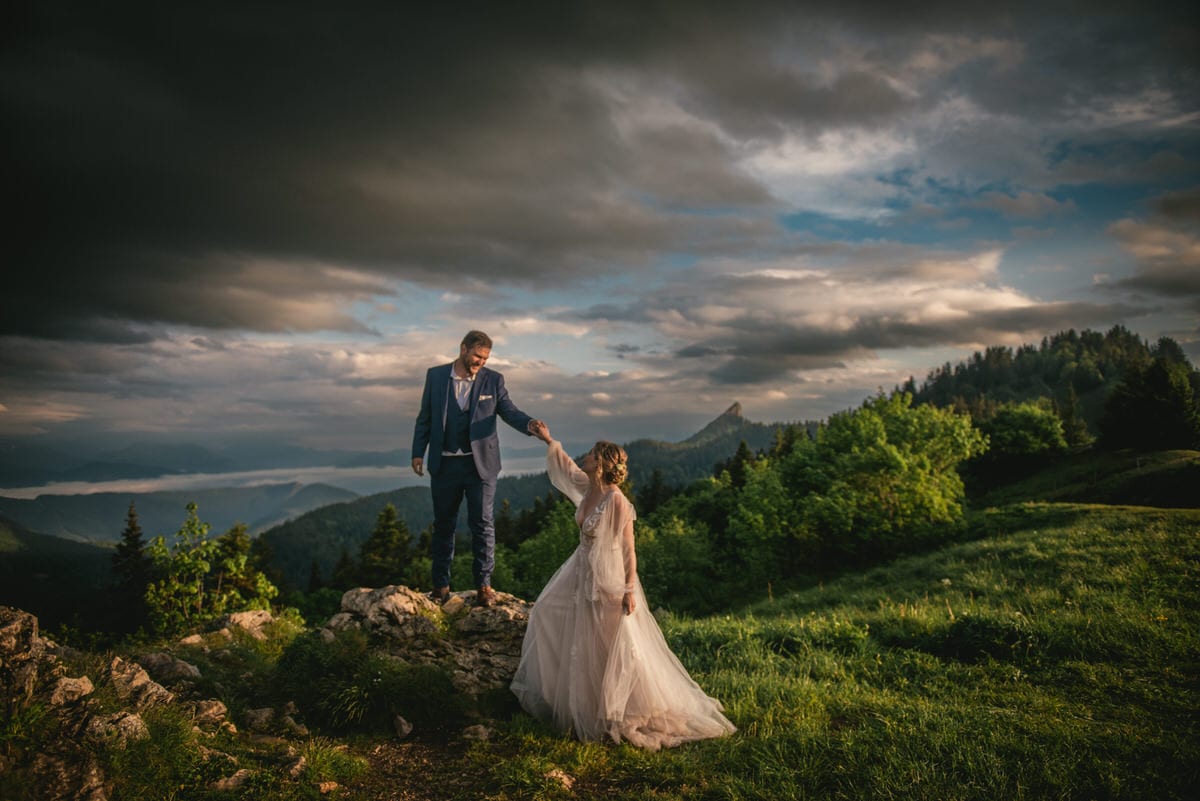
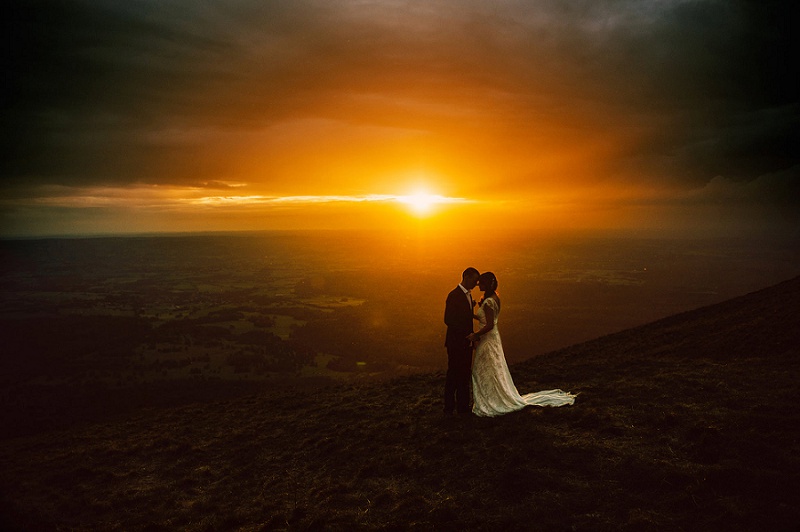
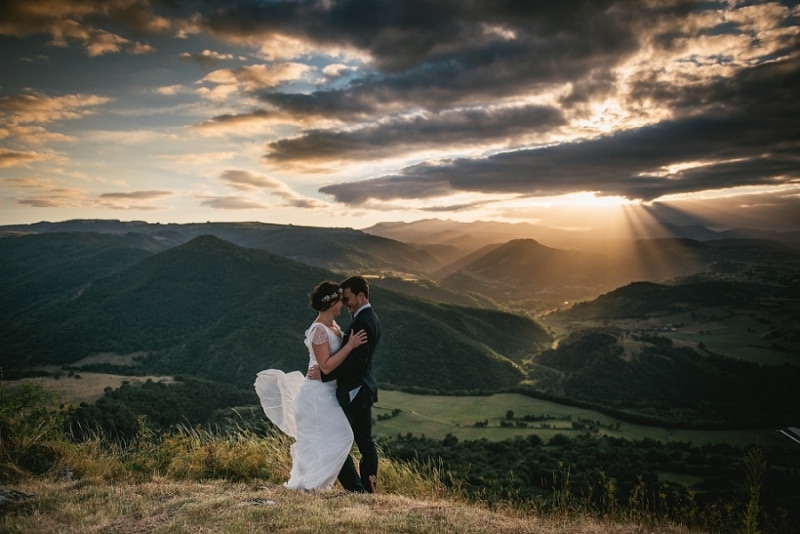
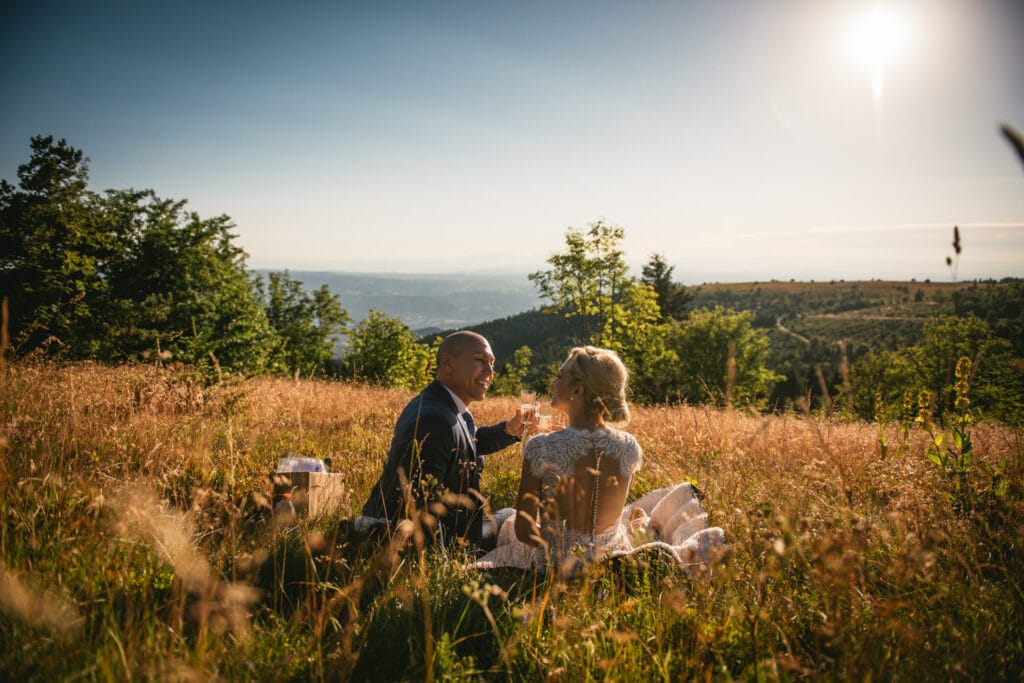
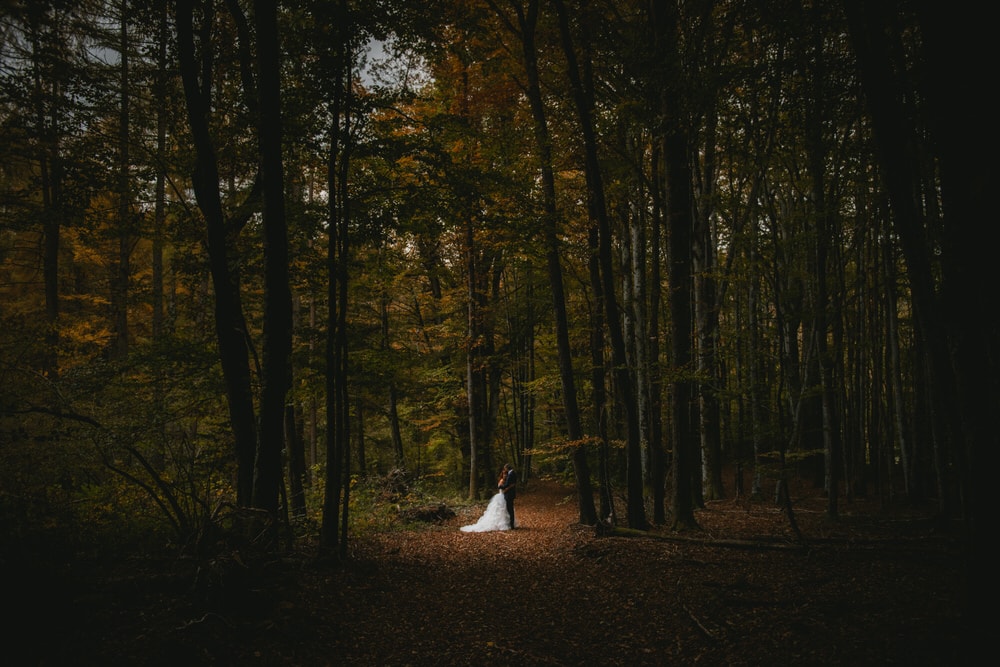
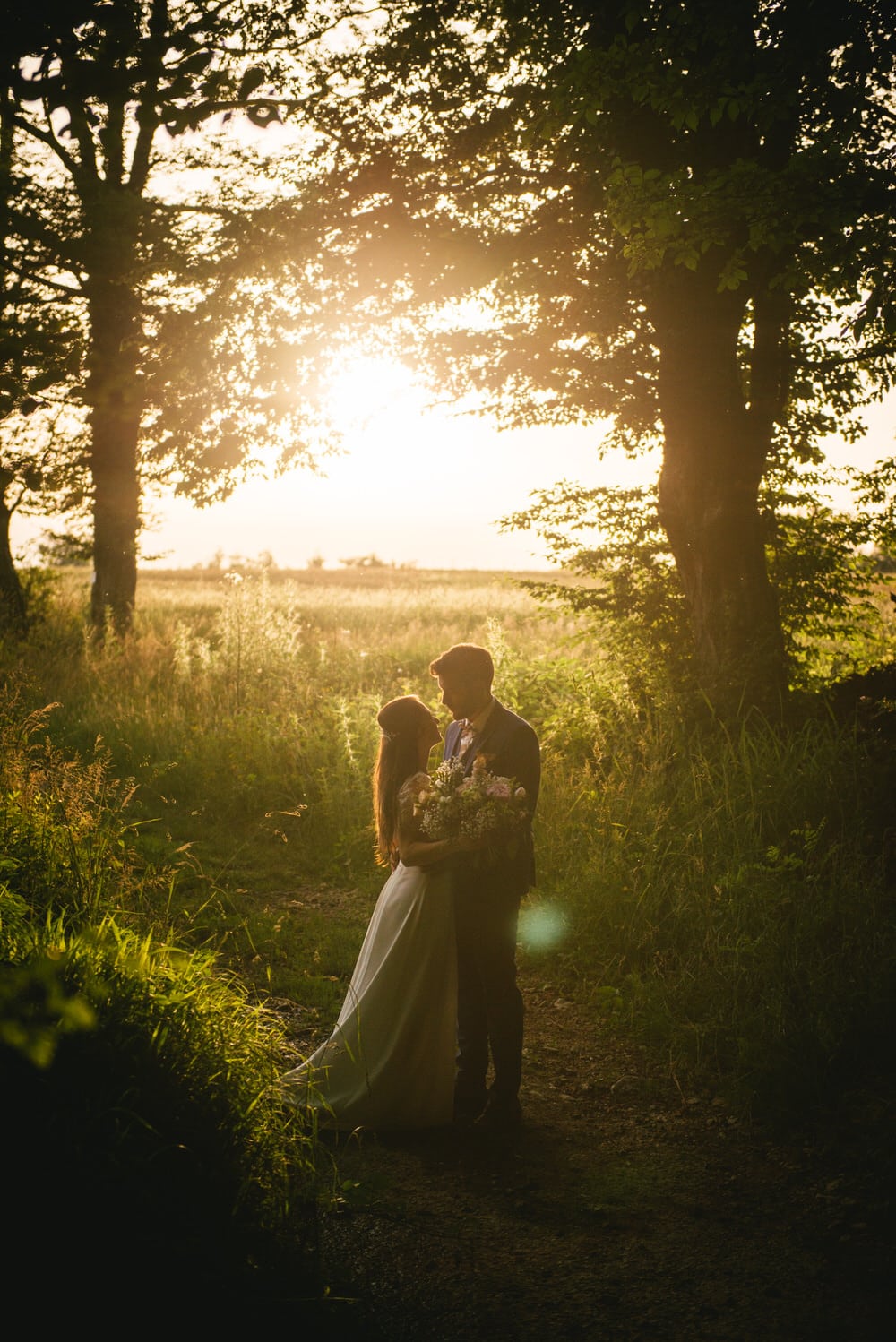
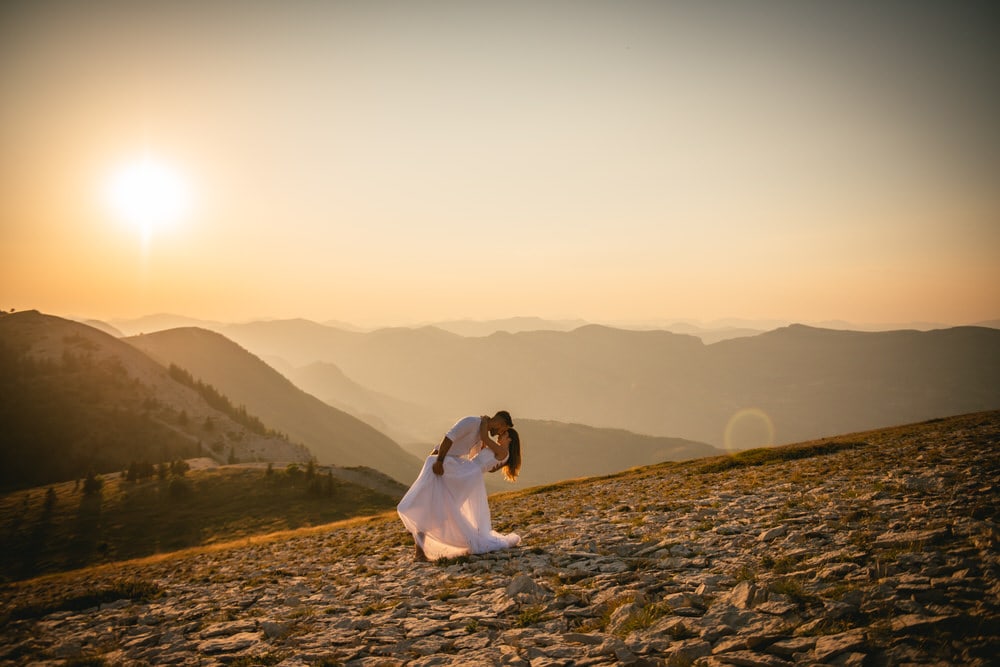
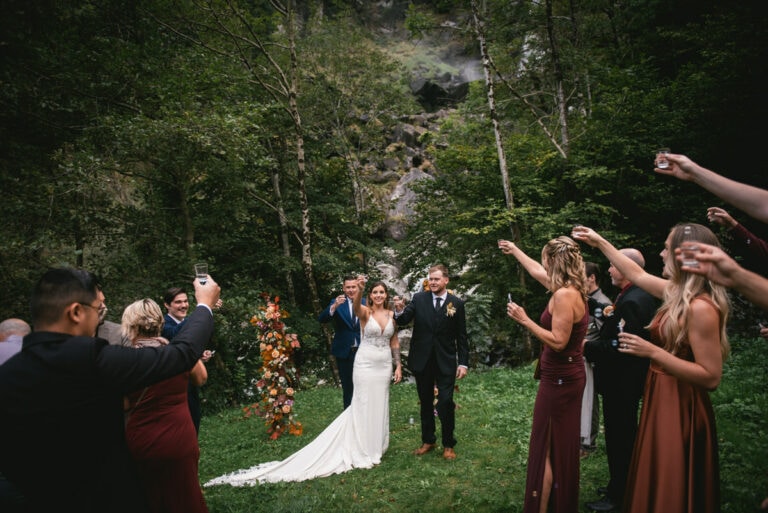
Couple during their France elopement at golden hour, photographed by Zephyr & Luna
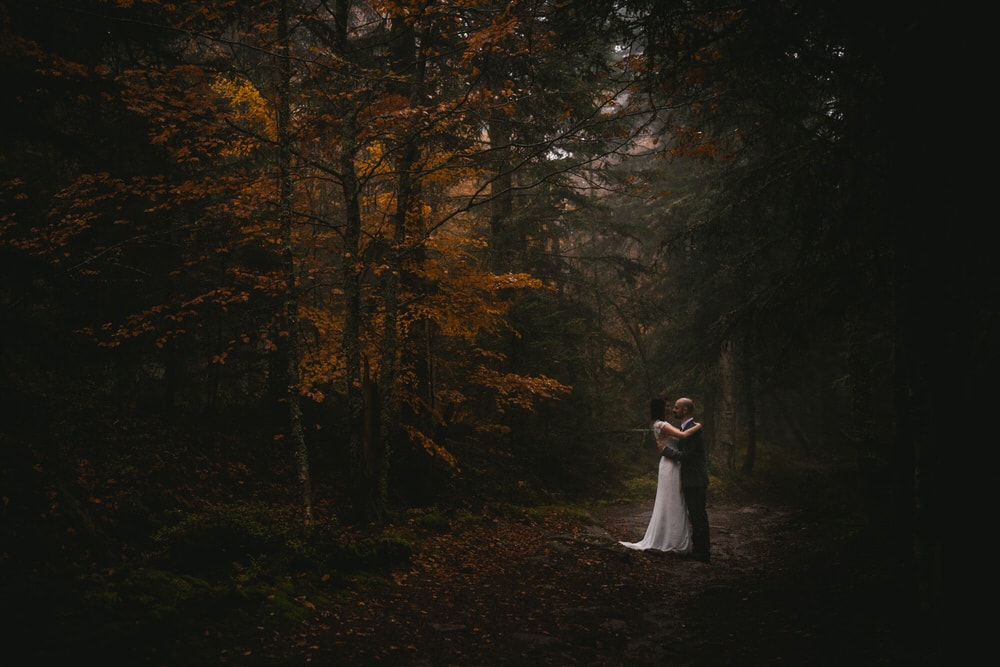
France elopement — Zephyr & Luna

What I do is different from most photographers-who-also-plan, or planners-who-also-shoot. I’m a photographer and full planner in one — I never take on one without the other, because I’ve seen what happens when the two aren’t coordinated. Your elopement doesn’t need a cast of vendors who’ve never met. It needs one person who knows exactly what the light looks like at 6:47pm on a September hillside in the Luberon, and has already called the mairie about the access permit.

This guide is the resource I wish existed when couples started reaching out to me asking where to elope in France. It covers every major region, the honest planning logistics, what things actually cost, and a section on spots I’ve never seen anyone else recommend. If you’re searching for a Paris elopement guide specifically — I’ll get to that too, with a candid take on what Paris can and can’t offer, and where I’d take you instead if you’re open to it.

Whatever you’re looking for — a ruined medieval cathedral, a mountaintop at sunset with a charcuterie spread and no one else for miles, or a thirteenth-century stone castle that costs less than a hotel room —  it exists here. And I know where it is.

“You show up. I handle the rest.”

2013 on the ground in France
300+ elopements coordinated
24 countries — but France is home
100% photography + planning, always

Ready to start planning your France elopement?

Availability is limited — the sooner we talk, the better.

Chapter 01

Why Elope in France
(And Why It’s So Much More Than Paris)

A country that changes every 10 kilometers

There’s a reason France keeps showing up on every “best countries to elope in” list — and it’s not just the wine, though the wine doesn’t hurt. It’s the sheer, almost unreasonable variety of what this country can look like within a single afternoon’s drive.

Leave my house in Provence in the morning and by lunchtime you can be standing in an alpine meadow above 2,000 meters. Drive south instead and you’re on a limestone coastline that turns turquoise in July. Head north for a few hours and you’re in a landscape of bocage hedgerows and half-timbered farmhouses that look like they were lifted from a different century entirely. Keep going and you hit chalk cliffs above the English Channel. Turn west and you’re in the volcanic highlands of the Massif Central, where the geology looks more like Iceland than anything you’d expect from a country famous for baguettes.

I’ve been documenting this since 2013 and I still find it startling. France has four mountain ranges, three distinct coastlines, one active volcanic region, and enough regional variation in food, architecture, and culture to fill a career. For elopements specifically, that diversity is an enormous gift. It means there is almost certainly a landscape that looks like what you imagined when you closed your eyes and pictured “us, somewhere beautiful, just the two of us.”

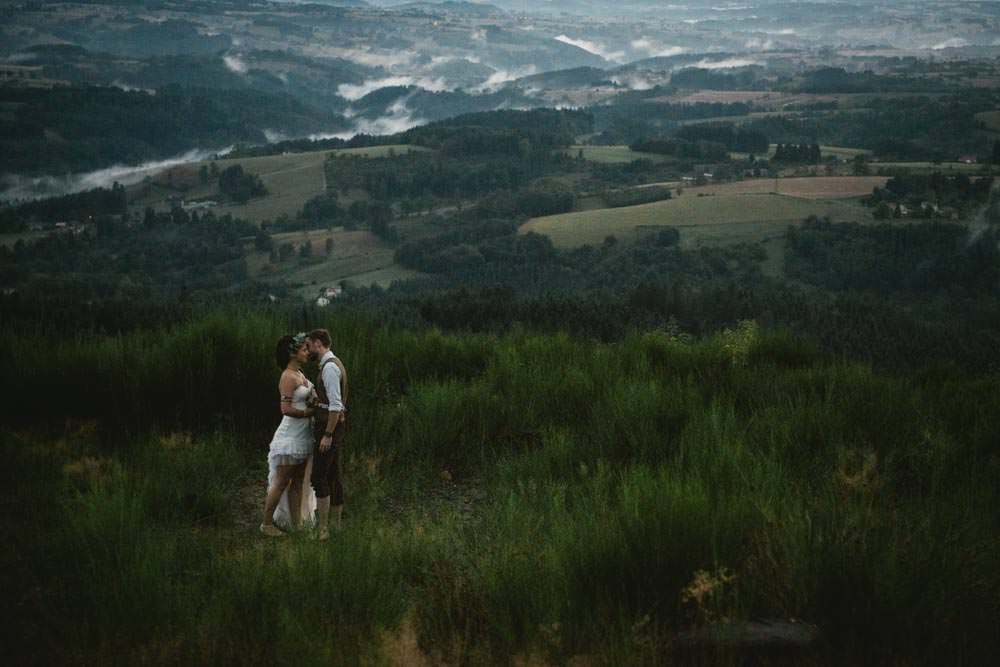
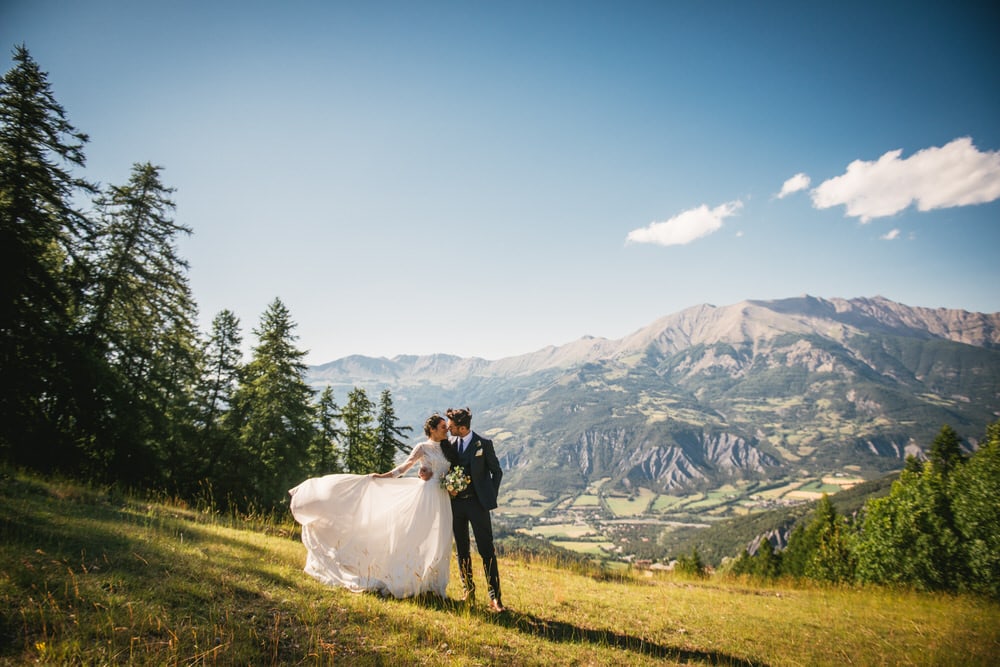
Dramatic French landscape at golden hour — the diversity that makes France extraordinary for elopements
France is not one landscape. It’s about thirty. © Zephyr & Luna

What makes France work for elopements specifically

Landscape diversity is one thing. What makes France specifically excellent for elopements is a more particular combination of factors that I’ve come to appreciate deeply after working here for over a decade.

Infrastructure that actually works

France has a road network that reaches genuinely remote places. I can get a couple to a ridge in the Hautes-Alpes with a 20-minute hike from a proper car park. That’s not true everywhere in Europe.

Private historic properties at human prices

The density of privately-owned châteaux, manoirs, and abbeys in France is extraordinary — and many of them need rental income to survive. You can privatize a genuine 13th-century castle in the Dordogne for what a mid-range hotel would cost you in Paris.

Light that photographers dream about

Provence and the south get 300 days of sun a year. The quality of afternoon light in the Luberon in September is something I’ve never been able to fully explain in words. The photos explain it instead.

Food and wine that elevate every moment

A sunset picnic in France is not the same as a sunset picnic anywhere else. Local cheese, a baguette from the village boulangerie, a bottle from the domaine down the road — this is not catering. This is just Tuesday in France.

Genuine solitude, if you know where to look

France has 68 million people and vast stretches of near-empty territory. The tourist crowds concentrate in maybe a dozen places. Everywhere else — and there is an enormous amount of everywhere else — you can have the landscape entirely to yourself.

Symbolic ceremonies with no legal friction

Most international couples opt for a symbolic ceremony in France and handle the legal paperwork at home. This removes every bureaucratic obstacle. You show up, you say your vows, it’s beautiful and real and yours. I’ll walk you through exactly how this works later in this guide.

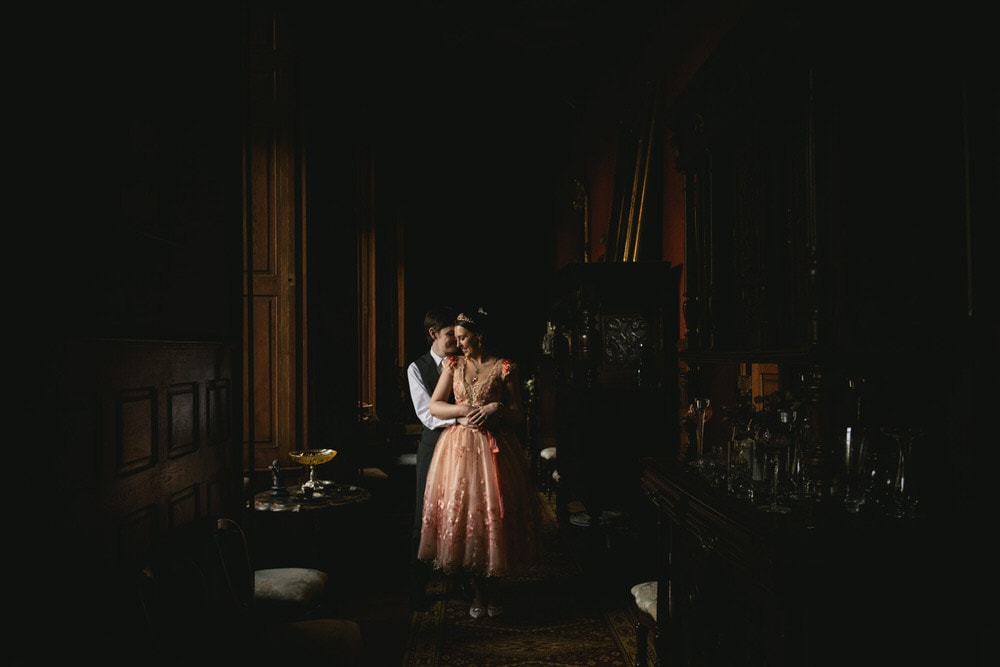
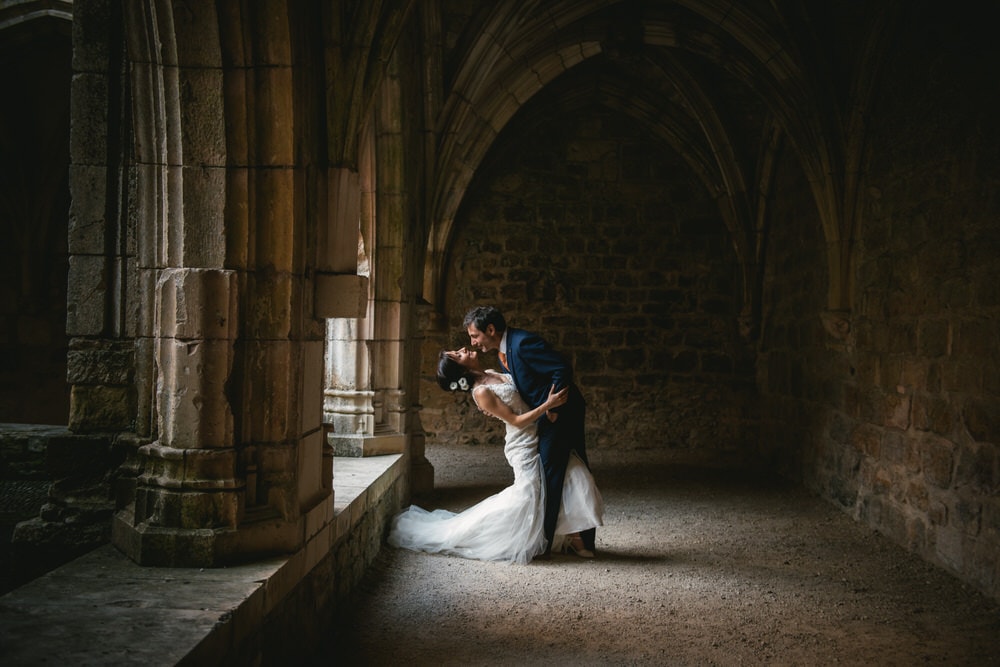
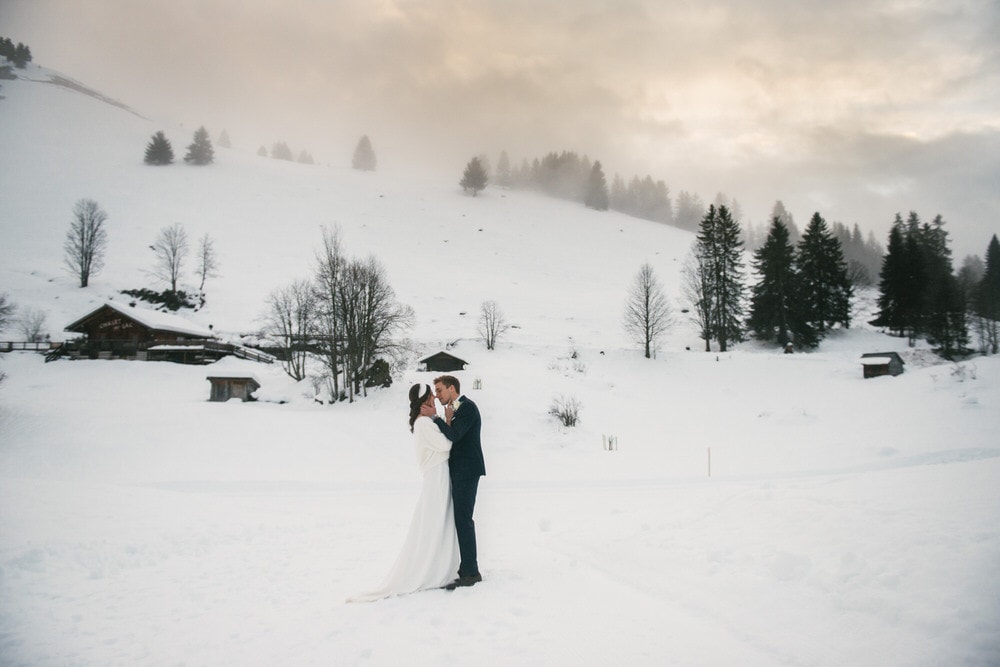
Intimate elopement moment in the French countryside, captured by Amber of Zephyr & Luna
Dordogne region — one of my favourite corners of France © Zephyr & Luna

A word about Paris — and where I redirect couples who ask

Let me be honest with you, because I think you deserve that more than a sales pitch: I don’t do elopements in Paris.

Not because Paris isn’t beautiful — it obviously is. But because there are people who have spent their entire careers building vendor networks, permit contacts, and location access in that specific city, and they are genuinely excellent at it. You will be better served by one of them than by me for a Paris elopement. Sending you their way when Paris is truly what you want is the right thing to do.

What I’ve noticed, though, is that when I ask couples why they want Paris, the answer is rarely “we specifically want the Eiffel Tower.” More often it’s something like: “we want France to feel like France — romantic, beautiful, old, a little cinematic.” And for that, Paris is one answer out of about thirty equally good ones. Often better ones, because:

  • You won’t be sharing your ceremony backdrop with a tour group.
  • The light in the countryside is different from city light — softer, more golden, less interrupted.
  • You can actually be alone. Properly alone. Just the two of you and whatever the landscape decides to do that day.
  • A château in the Périgord or a cliff edge in the Calanques will not look like anyone else’s elopement photos. The Eiffel Tower, by definition, will.

So: if Paris is a hard yes for you, I’ll gladly point you toward someone brilliant who works there every day. If Paris is a shorthand for “something magnificent and distinctly French,” — then keep reading. That’s exactly what this guide is for.

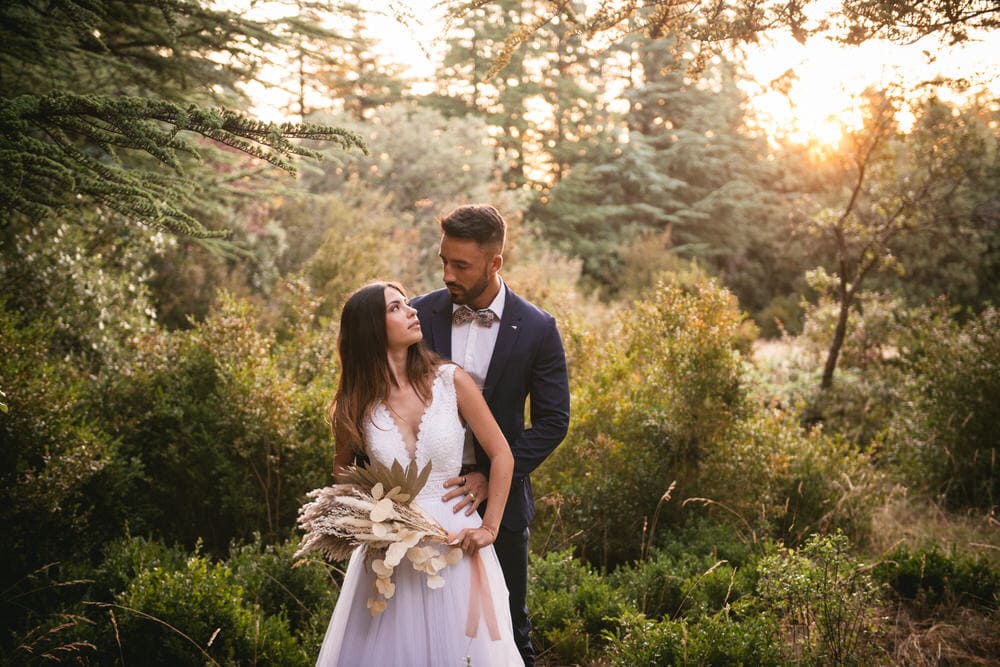
Hidden French location — the kind of place Zephyr & Luna finds for elopements outside Paris

This is what “somewhere in France” looks like when nobody else is there.

Photographed by Amber — Zephyr & Luna

Not sure which region is right for you?

Tell me what you’re picturing — I’ll find the place.

About Me — Zephyr & Luna

Chapter 02

The French Local
Behind Your Elopement

I started Zephyr & Luna after realizing that the elopement industry — especially in France — was dominated by photographers who arrived with a suitcase and a list of tourist spots, shot for two hours, and left. Nothing wrong with that, exactly. But it meant couples were getting France-as-postcard instead of France-as-it-actually-is. The hidden abbey with the unlocked gate on Tuesday afternoons. The lavender field ten kilometres past the famous one, where the light hits differently and there’s nobody else around. The shepherd’s bergerie in the Luberon you can rent for three days and access by a dirt road that doesn’t show up on Google Maps.

I was already French. I already knew those places. So I built a business around them.

Since then I’ve coordinated over 300 elopement projects across 24 countries — Iceland, Japan, Norway, Patagonia, Costa Rica, New Zealand, and a lot of places in between. That international experience matters, because it means I understand how to plan across time zones, how to manage vendors when nobody speaks the same language, and how to build a day that works logistically without losing the spontaneity that makes elopements feel alive.

But France is where I live. It’s where I go camping with my daughter on my favourite mountain. It’s the place I photograph in all four seasons because I genuinely can’t stop. When you book a France elopement with me, you’re not hiring someone who visited once and loved it. You’re hiring the person who knows the exact spot where the afternoon light turns the limestone cliffs gold, and has already figured out how to get there before sunset.

Amber camping with her daughter on her favourite mountain in Provence
My favourite mountain, with my favourite person.
Amber in her garden in Provence in autumn
My garden in autumn. Yes, it always looks like this.
Amber on the Côte d'Azur in winter, near her home in Provence
The Côte d’Azur in January, ten minutes from home.
300+ elopements coordinated
24 countries on the ground
2013 doing this since
1 person. photographer + planner, always

What this means for you, practically

Most couples who find me have already tried to plan something and hit a wall — too many vendors, too many moving parts, too many people who’ve never met each other trying to coordinate the most important day of their relationship. The French elopement industry is full of photographers who’ll show up and do beautiful work, and planners who’ll build you a spreadsheet and hand it off. Finding someone who does both, genuinely, and who actually lives in the country you’re eloping in — that’s rare.

I do the location scouting, the vendor coordination, the permit paperwork, the timeline, the light calculations, and the photography. On the day, there’s nobody to brief except me. No miscommunication. No “I thought you were handling that.” Just you two, the landscape, and someone who’s been here long enough to know exactly what’s going to happen when the sun hits the valley at 6pm in September.

I work with a small number of couples each year, intentionally. I only take on projects I’m genuinely excited about. If what you’re picturing sounds like something I’d want to photograph for myself, we’re probably a good match.

Want to know if we’re a good fit?

Tell me what you’re picturing. A five-minute read of your message tells me more than any questionnaire.

Where to Elope in France — Zephyr & Luna

Chapter 03

Where to Elope in France
— My Personal Map

France has no bad regions for an elopement. But some are better known than others, and the best spots within each one are almost never the ones that show up on a travel blog. Below is my honest, firsthand breakdown — the places I’ve actually worked in, the spots I keep going back to, and the ones I’d pick if it were my own elopement.

My France elopement location map — places I’ve worked in and recommend.

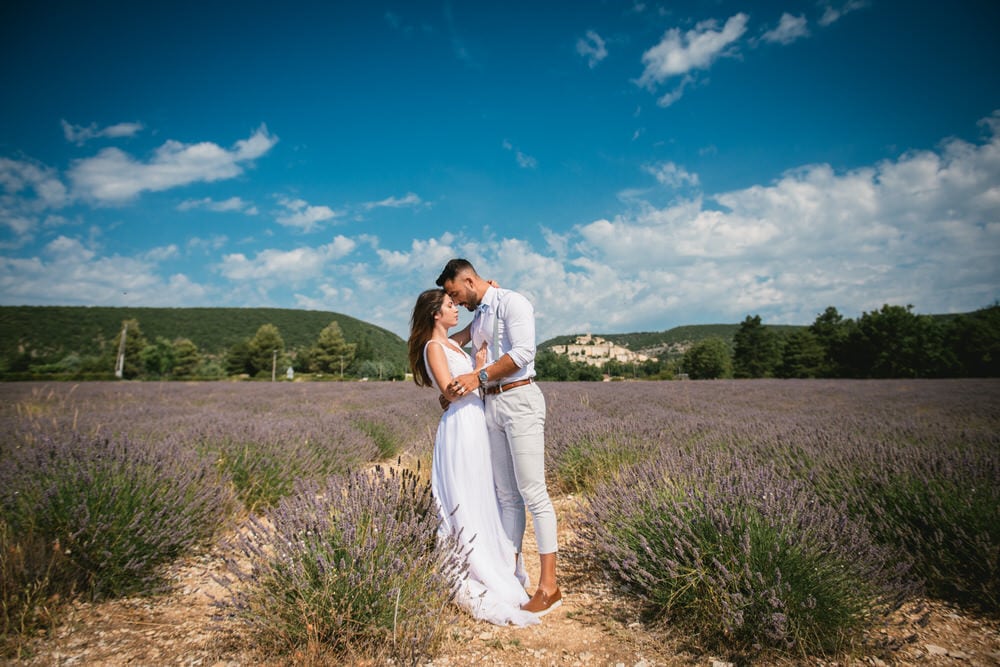
Lavender fields in Provence — elopement location by Zephyr & Luna

My backyard — literally

Provence
& the Luberon

I live here. That’s not a selling point — it’s context. When I say I know Provence, I mean I know which lavender fields are worth waking up at 5am for and which ones are flooded with tour buses by 8. I mean I know the village baker who opens the gate to the old mill on weekends. I mean the Luberon is my daily landscape, not a destination I fly into.

The postcard version of Provence is real — the lavender does bloom that colour, the light does do that thing at 6pm in July. But the version most photographers show you is the surface. The Forêt de Cèdres de Ménerbes is a cedar forest that feels like it belongs in another country entirely — ancient, quiet, and almost entirely unknown outside the Luberon. The lavender fields around Banon, an hour north of the famous Valensole plateau, are smaller, less visited, and genuinely more beautiful.

Forêt de Cèdres de Ménerbes Lavender fields of Banon
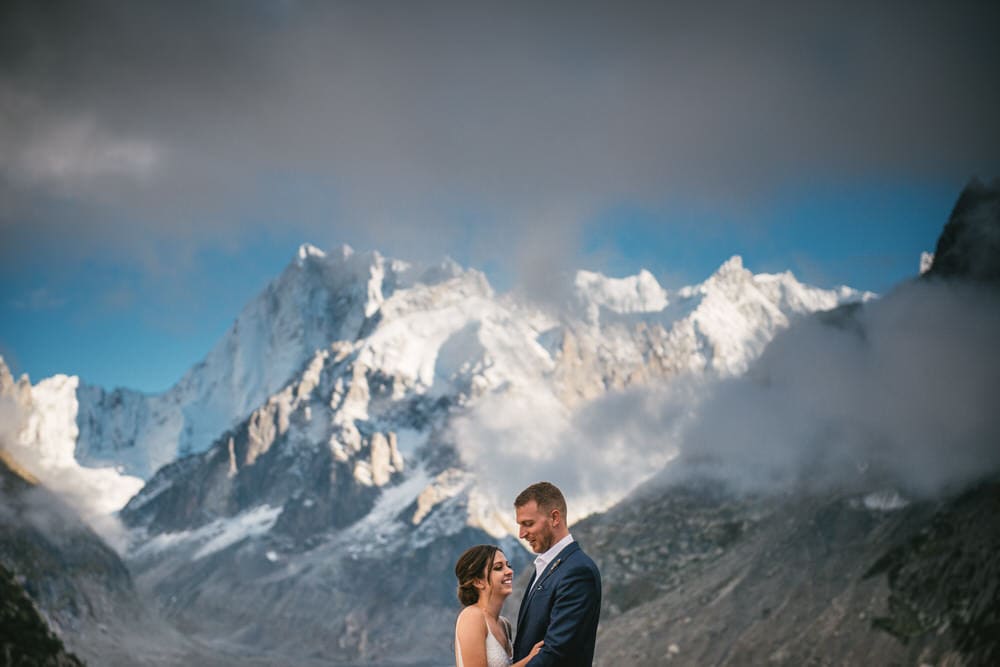
Alpine landscape in Haute-Savoie — elopement location Sixt-Fer-à-Cheval

Peaks, glaciers & still water

The Alps
& Haute-Savoie

The French Alps are not the same Alps as the Swiss ones. They’re wilder, less manicured, and outside of the major ski resorts, dramatically less crowded. Haute-Savoie in particular has a quality of light that I think is unmatched anywhere in France — the combination of altitude, clean air, and the reflective surface of the lakes does something extraordinary to photographs.

Sixt-Fer-à-Cheval is a glacial cirque at the end of the Giffre valley that most people outside France have never heard of. Walls of rock on three sides, waterfalls dropping hundreds of metres, a river running through meadows of wildflowers. In high summer there are some hikers. In June or September, you may have it almost entirely to yourself. The lake of Annecy, for its part, rewards the couples who are willing to leave the lakeside path and find a viewpoint above the water — the geometry of it from height is extraordinary.

Sixt-Fer-à-Cheval cirque Lake Annecy from above
Dordogne Périgord Noir — château and enchanted forest at sunset

Medieval stone & enchanted forest

The Dordogne
& Périgord Noir

The Dordogne is the region I recommend most often to couples who say they want “a château” without necessarily knowing what they mean by that yet. It has more classified historic monuments per square kilometre than almost anywhere else in France — including a number of privately-owned medieval châteaux that take bookings, cost less than a Paris hotel, and come with the kind of silence at night that cities have entirely erased.

The Périgord Vert — the greener, less-touristed northern part of the department — is where I send couples who want the château experience without the summer crowds of the Dordogne valley. And the forests here, particularly in late afternoon in October, are something I have genuinely never been able to properly describe. The oaks hold their leaves until November. The light comes in at a low angle and turns everything amber. It looks like a film set. It is not a film set — it is just the Dordogne at sunset, and it does this every day.

Private châteaux, Périgord Vert Oak forests at golden hour
Normandy — ruins and the Mont-Saint-Michel belvedere

Ruins nobody talks about

Normandy
— and the ruins nobody talks about

Everyone knows Normandy from two things: the D-Day beaches, and the Mont-Saint-Michel. Both are worth seeing. Neither is where I’d take you for an elopement. The beaches are moving and historically significant, but they’re not intimate. And the Mont-Saint-Michel, beautiful as it is, sees millions of visitors a year.

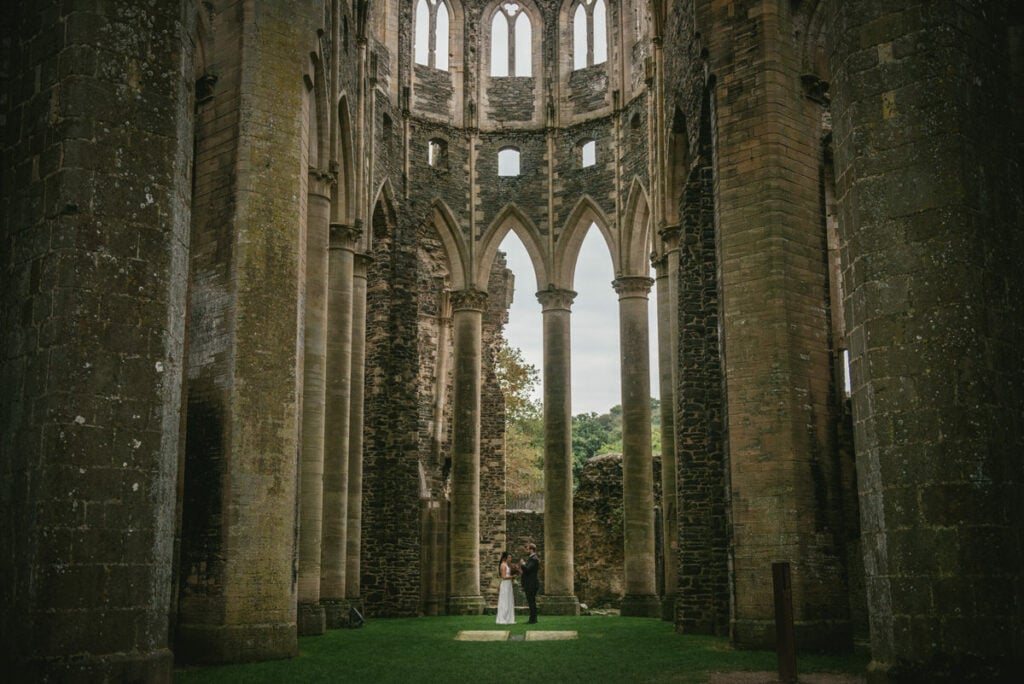
What I’d take you to instead is the Belvédère Saint-Léonard — a viewpoint above the bay that gives you the Mont-Saint-Michel at a distance, reflected in the tidal flats at low tide, with nobody else around. And then, if you’re willing to navigate some unmarked forest paths, there is a ruined abbey in the Norman interior that I am deliberately not naming in full here because the day it shows up on TikTok is the day I’ll have to find somewhere else. What I’ll say is: it’s in the bocage, the walls are still standing to full height in places, there are trees growing through the nave, and I’ve never once seen another person there.

Belvédère Saint-Léonard The ruined abbey (ask me directly)
Corsica — Tour de Roccapina and the Aiguilles de Bavella

The off-season secret

Corsica
— the off-season secret

In July and August, Corsica is overrun. I say this with affection, as someone who loves the island deeply — but the beaches you’ve seen on Instagram will have 200 people on them in peak summer, and the roads to reach them will have been gridlocked since breakfast. This is not where I’d send you.

Corsica in May, October, or November is a different island entirely. The maquis is fragrant, the light is lower and more interesting, the beaches are empty, and the mountains — which most summer visitors never reach — are extraordinary. The Tour de Roccapina is a Genoese tower perched on a granite outcrop above a lagoon-coloured sea, accessible by a 20-minute walk through scrubland. The Aiguilles de Bavella are needle-shaped granite peaks in the island’s interior that look like they were placed there for the purpose of making photographs. Neither appears on most France elopement guides. Both are, objectively, extraordinary.

Tour de Roccapina Aiguilles de Bavella
Auvergne volcanic landscape — Chapelle Sainte-Madeleine and Puy Mary

Volcanoes, forests & Roman bridges

Auvergne
— volcanic landscapes and Roman bridges in the forest

Auvergne is the region I recommend to couples who want something genuinely wild — not alpine-wild, but old-wild. The kind of landscape that feels like it has been here since before people had names for things. The Massif Central is one of the oldest geological formations in Europe, and in Auvergne you can feel that age in the ground under your feet.

The Chapelle Sainte-Madeleine, perched on a volcanic plug above the valley, is the kind of location that stops photographers mid-sentence. It is small, ancient, almost impossibly placed, and it rewards the couple who’s willing to walk uphill for twenty minutes in good shoes. The Puy Mary in the Cantal offers the widest views in the Massif Central — a volcanic caldera collapsed into a landscape that has no parallel anywhere else in France. And somewhere in the forests of the Allier, accessible by a path that doesn’t appear on Google Maps, there is a Roman bridge that has been there for two thousand years and still works perfectly. That one I’ll tell you about when you contact me.

Chapelle Sainte-Madeleine Puy Mary, Cantal Roman bridge (ask me directly)
The French Pyrenees — Lac de Bethmale and Col du Tourmalet

Wild mountains & Basque soul

The Pyrenees
& Basque Country

The French Pyrenees are consistently underrated relative to the Alps, and I think that’s partly because they’re harder to reach from Paris. From where I live in Provence, they’re a comfortable drive south-west, and the contrast with the Alps is immediate: wilder, less developed, with a culture and architecture that feels genuinely distinct from the rest of France.

The Lac de Bethmale is a glacial lake in the Ariège surrounded by fir forests that reflects the mountains with a stillness that I’ve rarely seen matched anywhere. It’s accessible by car, which means it sees day visitors in summer — but at dawn, or in October, it is silent. The Col du Tourmalet, when the road is clear, offers a high-altitude landscape of bare rock and sky that has nothing to do with the pastoral France most people picture — and photographs accordingly. The Basque Country, for its part, brings something entirely different: a coastline of green cliffs and powerful Atlantic waves, a cuisine that I’d argue is the best in France, and a culture old enough to have a language no linguist has ever fully explained.

Lac de Bethmale, Ariège Col du Tourmalet
Loire Valley — Château de la Mothe-Chandeniers

The château belt

Loire Valley
& the château belt

The Loire Valley is the obvious choice for couples who want a château, and it’s obvious for good reason — the concentration of Renaissance architecture along this river is genuinely unmatched anywhere in the world. Chambord, Chenonceau, Villandry: the famous ones are famous because they are extraordinary, and I won’t pretend otherwise.

But the Loire also has something that most guides overlook: a secondary tier of lesser-known châteaux, some of them ruins, some of them still inhabited, many of them available for private rental at prices that bear no relationship to how beautiful they are. The Château de la Mothe-Chandeniers is the most photogenic ruin in France that you’ve probably never heard of — a 13th-century castle being slowly reclaimed by vegetation, its reflection doubled in the moat that still surrounds it, accessible to visiting couples through a conservation project. There is nothing else quite like it. It is the kind of place that makes people put their phones away and just look.

Château de la Mothe-Chandeniers Private rental châteaux, Loire tributaries
French Riviera — Île Sainte-Marguerite and the Temple d'Hercule

Minus the crowds

The French Riviera
(minus the crowds)

I live ten minutes from the Côte d’Azur, which means I can tell you with some authority what it’s like when you get off the motorway and ignore the places that appear on every list. The Riviera in summer is a traffic jam punctuated by beautiful views. The Riviera in January is mine, and it’s extraordinary.

The Île Sainte-Marguerite, the larger of the Lérins islands just off Cannes, is a maritime pine forest surrounded by water the colour of the Caribbean. You reach it by a 15-minute ferry. In low season, you can walk its paths without encountering another person for an hour. The island has a fort — and within that fort, a cell where the Man in the Iron Mask was imprisoned for eleven years. The walls are still marked. And scattered along the coastal path around the Cap d’Antibes, barely signposted and known mainly to locals, is the Temple d’Hercule — Roman ruins perched directly above the sea, used as a lighthouse for two thousand years, now silent except for the sound of the water below. It’s five minutes from a car park. Almost nobody goes there.

Île Sainte-Marguerite Temple d’Hercule, Cap d’Antibes

Not sure which region fits your vision?

Describe what you’re picturing — I’ll find the exact spot.

The France Elopement Nobody Shows You — Zephyr & Luna

Chapter 04

The France Elopement
Nobody Shows You

Every guide has a list of locations. Mine does too — you just read it. But there’s a tier below that list that doesn’t make it into articles, doesn’t appear on Pinterest boards, and isn’t in anyone else’s portfolio because nobody else has been there. These are the places I’ve been quietly accumulating since 2013, one dirt road and one unlocked gate at a time.

My actual speciality — the thing that makes what I do different from almost anyone else working in France — isn’t a particular region or a particular style. It’s accessible beauty with nobody else around. I am obsessed with finding places that are genuinely magnificent, genuinely reachable without a helicopter or a two-day trek, and genuinely empty of other people. France has more of these than you would believe. Finding them takes years of living here and driving slowly on roads that don’t go anywhere obvious.

Some of what’s below I’ll name outright. Some I’ll describe without coordinates, because the day certain places show up on TikTok is the day I’ll have to start looking for replacements. The full details come when we talk.

Beautiful. Genuinely, not theoretically
Accessible. Normal shoes, no helicopter
Empty. Just the two of you

Auvergne

A Roman bridge in a forest nobody visits

Roman bridge hidden in an Auvergne forest
Auvergne — the bridge has been there for two thousand years. So has the silence.

Two thousand years old, still perfectly intact, completely swallowed by forest and accessible via a path that doesn’t appear on any navigation app. I’ve been coming here since 2013 and have never once encountered another person. The stone is green with moss. The river below it runs clear over flat rocks. It is fifteen minutes from a car park, and it looks like it belongs in a different century — because it does.

This is the kind of place that makes couples put their phones away and just stand there for a moment. It is best in autumn, when the light comes through the canopy at a low angle and the whole forest turns amber around the grey stone.

Haute-Savoie

A mountain summit you can drive to

Accessible mountain summit in Haute-Savoie with Alpine views
Haute-Savoie — above the clouds, ten minutes from the car.

Most people think “mountain summit” means a full day of hiking in technical gear. This one doesn’t. You park, you walk ten to fifteen minutes on a clear path, and you’re standing above the clouds with an unobstructed 360-degree view of the Alps. No crowds because the trailhead isn’t signposted the way the famous ones are. No noise except wind.

This works in every season except deep winter when the road closes. In September and October, with the light lower and the air sharper, it is one of the most quietly extraordinary places I know.

South of France

A ruined château that no one has found yet

Ruined château in the south of France, unknown and unvisited
South of France — walls still standing, complete silence, never a soul around.

Towers still pointing at the sky. Walls still standing to full height in places. Completely engulfed by vegetation, entirely absent from tourist maps, and consistently empty. The light in late afternoon hits the old stone at an angle that makes the whole ruin glow. I’ve never figured out exactly why nobody else comes here — it may be the access road, it may be the lack of signage. Either way, I’m not going to fix it.

Corsica

A Corsican summit the summer crowds never find

Accessible mountain summit in Corsica, deserted
Corsica — granite, sea horizon, and nobody else for miles.

Off-season Corsica from above. In October or May you get granite peaks, a sea that runs from dark blue to almost white at the horizon, and a silence so complete it takes a few minutes to adjust to. This summit is accessible to anyone reasonably fit — it’s not technical, it’s not exposed, and the payoff is the kind of view that makes the word “panoramic” feel inadequate.

Côte d’Azur

A stretch of Riviera coastline with nobody on it

Deserted limestone coast on the Côte d'Azur
Côte d’Azur — the Riviera before the parasols arrived.

Yes, this exists. No, I’m not publishing the exact location. What I’ll tell you is that it’s limestone, it’s turquoise, it looks like the Riviera of fifty years ago, and on a weekday in October it is entirely empty. I live ten minutes away. I know exactly where to park and which path to take. It is one of those places that makes people genuinely not believe they’re still on the Côte d’Azur.

Near Nice

A sunset viewpoint that’s guaranteed empty

Sunset viewpoint near Nice with no crowds
Near Nice — five minutes from a car park, and consistently empty at sunset.

A viewpoint I return to constantly because it delivers every single time — the right light, the right view, the right silence. It is close to a major city. Nobody goes there. That combination is not something you can research into existence — it’s just the result of knowing a place well enough to have found its overlooked corners.

Provence

A village that time forgot to visit

Isolated stone village in Provence
Provence — stone, silence, one fountain still running.

Stone houses. No signage. One fountain that still runs. A church with an unlocked door and box pews that haven’t moved since the Revolution. In a decade of visiting I have never seen a tour group, never seen a photographer who wasn’t me, never had to wait for someone to clear the frame. It is the Provence people imagine when they decide to elope here, and rarely find because they go to the obvious places instead.

Dordogne, Périgord Vert

A 13th-century château with a châtelaine who loves elopements

Real, named, and mine to share with the right couples. A medieval château in the Périgord Vert, still in the hands of the family who built it. The châtelaine is one of the warmest people I’ve encountered across 24 countries of work. She privatises the property for elopements — not as a commercial venue, but as a genuine welcome into her home and her family’s history. The food she prepares is outstanding. I’ll give you the name when we’ve had a conversation and I know it’s the right fit — not to be precious about it, but because I want to make sure the match is right before I send anyone there.

Full name and details shared on enquiry

Alps · South · Auvergne

Forests where nobody has been in years

I have several. One in the Alps that I found by following a Roman road on a geological survey map until it ended in a clearing that doesn’t appear to have been visited in decades. One in the south where the light comes through the canopy at an angle that looks almost deliberate. These are not Instagram forests with a well-worn path to a predictable spot — they’re the kind where you hear nothing except wind and water, and the photographs look like paintings.

Locations shared during planning

Normandy · Auvergne · Loire

Ruined abbeys, lost chapels, and a church at the top of a hill

A Romanesque abbey in Normandy where the trees are reclaiming the nave — roots in the flagstones, branches where the roof used to be. A chapel in Auvergne at the summit of a hill facing west, where at 7pm in July the light comes straight through the missing rose window and turns the stone interior completely gold for about twelve minutes. A church somewhere in the Loire with a lock that stopped working in 1987 and a view of the valley I have never seen photographed anywhere. I’ve been to all of these. I know how to get to all of them without a wrong turn.

Locations shared during planning

“The best elopement locations in France are the ones nobody thought to put on a list. I’ve been collecting those since 2013. Most of them are accessible in normal shoes. None of them will look like anyone else’s photos.”

— Amber, Zephyr & Luna

Want to know what I’d find for you?

Describe what you’re picturing. The more specific, the better.

Planning Your France Elopement — Zephyr & Luna

Chapter 05

Planning Your France Elopement
— The Practical Stuff

The questions I get asked most often, answered honestly. No vague reassurances, no “it depends” without a follow-up. Just the actual information you need to make decisions.

How far in advance to plan

The honest answer is: further than you think, especially if you want a specific date, a specific region, or if you have a small group joining you. France is a popular elopement destination, and the best locations — and the best vendors — book up. Here’s a realistic timeline.

France elopement at golden hour — timing matters
Golden hour in Provence lasts about 45 minutes. Everything else about planning it takes longer.

12–18 months out

Ideal for peak season (May–October), popular regions like Provence or the Dordogne, private château rentals, and couples who know exactly what they want and don’t want to compromise on date or location.

6–12 months out

Comfortable for most couples. Enough time to secure the location, sort travel logistics, plan the day properly, and not feel rushed. This is the window where I do most of my planning work.

3–6 months out

Doable, with flexibility. Peak dates and the most sought-after private venues may already be gone, but there is still a huge amount possible. Off-season (November–April) is particularly viable on short notice.

Under 3 months

Ask me anyway. I’ve pulled together last-minute elopements that turned out to be among the best I’ve ever photographed. The constraints are real, but so is the possibility.

Permits, locations, and what requires authorisation

Remote location in France requiring no permit French countryside elopement location
Most of the locations I use require no permit at all — that’s part of why I choose them.

This is where local knowledge makes a significant practical difference. The permit situation in France varies enormously by location, and navigating it without context can either get you in trouble or, more commonly, cause you to avoid places you could perfectly legally use.

The general rule

Public land with no specific restrictions — national forests, most mountain terrain, open countryside, coastal paths — generally requires no permit for a small private gathering. A ceremony for two people with one photographer on a forest path is not a commercial event. It doesn’t require a licence.

National parks have their own rules, and some require authorisation for any professional photography. I know which ones, and I know how to apply. It’s rarely a dealbreaker — it’s just paperwork.

Private property always requires the owner’s permission. When I work on private land, that permission is part of what I arrange as your planner. It’s one of the reasons having someone who knows the territory matters.

Historic monuments and their curtilage (the area around them) often require permits for professional photography. Some iconic locations have become genuinely difficult to work in. Others, surprisingly, haven’t. I know which is which.

The short version: for the kinds of locations I typically work in — deliberately chosen for their accessibility and their distance from over-regulated tourist sites — permits are rarely an issue. When they are, I handle them. That’s included in what I do.

What to budget — realistic ranges, not fantasy numbers

Elopement budget guides tend to either dramatically understate costs (to seem accessible) or list every possible luxury add-on (to seem comprehensive). Neither is useful. Here are honest ranges based on what elopements in France actually cost, organised by scope.

France elopement — a day worth every penny
A well-planned day costs less than most couples expect. A poorly planned one costs more.

€3,000 – €6,000

Just the two of you, one location, one day. Photography and planning included. Travel and accommodation on top. Realistic for a focused elopement with no extra vendors, a non-private location, and off-season timing. This is where a lot of my couples land.

€6,000 – €12,000

A fuller day with add-ons. Private venue hire, celebrant, flowers, a picnic or dinner, possibly a small group of guests. Multiple locations across a day. This is the most common range for couples who want the full experience without going into luxury territory.

€12,000 – €25,000+

Private château, full weekend, expanded guest list. Multi-day format, bespoke catering, full floral design, additional vendors. The upper end of what I coordinate — and where the Dordogne château I mentioned earlier comes in.

These ranges exclude your flights, accommodation, and personal expenses. They include my photography and planning fees, which are not itemised separately — I work as a single integrated service, not as a photographer you also ask to plan things.

If a budget is tight, the single most effective lever is timing: off-peak dates, off-season months, and locations that don’t require permit fees or private hire costs open up a lot of possibilities that peak-season bookings don’t.

The vendor question — who do you actually need?

The elopement industry has a tendency to expand the vendor list until it starts looking like a small wedding. Here is my honest take on what most France elopements actually require, versus what’s optional.

Elopement in France — keeping it simple and real
The fewer moving parts, the more present you get to be on the day.
Photographer + planner (me) The non-negotiable. Without a photographer, you have memories but no photographs. Without a planner, you have a location and no plan. I do both — which means this is one person, one brief, and no coordination overhead between the two.
Celebrant Needed if you want an actual ceremony — someone to officiate, lead the vows, make the moment feel intentional. For a symbolic ceremony you have complete freedom on who this is and what they say. I have celebrants I trust and work with regularly.
Hair & makeup artist Optional but commonly booked. Worth it if you want to feel polished and not spend the morning of your elopement doing your own hair in a hotel bathroom. I can recommend artists who travel to location.
Florist Optional. A bouquet or small floral arrangement adds a lot to photographs and to the feeling of the day. It doesn’t need to be elaborate or expensive. I work with florists who understand elopements and don’t assume “wedding scale.”
Catering / picnic For couples who want a meal or a celebratory spread as part of the day — which I’d actively encourage, because eating well in France is one of the great pleasures of being in France. This can be anything from a curated picnic I put together locally to a private dinner at a restaurant I’ve vetted.
Videographer I don’t do video, and I don’t coordinate separate videographers as a standard service. If video is important to you, it’s worth discussing early — a second person on location changes the dynamic of the day, and I want to make sure it works for everyone.
Wedding planner (separate from photographer) Not needed when you’re working with me, because the planning is built in. If you’ve already hired a separate planner and want to add me as photographer only — that’s a conversation worth having, but not my standard model.
● Essential ◐ Optional but recommended ○ Not standard

“The best-planned elopements are the ones where everything was decided in advance and nothing had to be decided on the day. That’s what planning actually buys you — not a spreadsheet, but presence.”

Still have questions about the logistics?

Get in touch — I answer planning questions before any commitment is made.

Seasons & Timing in France — Zephyr & Luna

Chapter 06

Seasons & Timing
in France

France has four very distinct seasons, and each one produces a completely different country to elope in. There is no wrong answer here — only different ones. What follows is my honest take on each season, based on what I’ve actually seen and photographed across every region.

Spring The green window
Mid-April to mid-June
France in spring — green landscapes and soft light
Spring in France — everything is green, almost nothing is crowded yet.

Spring is the season I recommend most often to couples who are flexible on timing, and the one that consistently delivers the most pleasant surprises. The light is soft, the temperatures are comfortable, the landscapes are at their most intensely green, and the crowds that define July and August haven’t arrived yet.

The window that works best is mid-April through mid-June. Before mid-April, the trees are still bare in much of France and the colours are muddy — spring hasn’t fully landed yet. After mid-June you’re edging into early summer heat and the first influx of tourists. The six weeks in between are, in my experience, close to perfect.

Provence in May is the lavender fields before the lavender blooms — which sounds like a contradiction, but what you actually get are green rolling hills, wildflowers in the garrigue, and a version of the Luberon that feels entirely private. The Loire Valley in late April, when the orchards are in blossom and the chateaux gardens are at their peak, is something that doesn’t appear in enough elopement photography. It should.

The one caveat: spring weather in France is variable. The south is more reliable; the north and the mountains can still throw cold, wet days at you through May. I always build contingency into spring planning — not because bad weather ruins a day, but because being prepared for it means it doesn’t have to.

Best for
  • Loire Valley & château belt
  • Provence before the crowds
  • Normandy coast & bocage
  • Lower Alps before snowmelt ends
Worth knowing
  • Lavender doesn’t bloom until late June
  • Variable weather north of the Loire
  • Best availability of the year
  • Prices are generally lower than peak
Summer Where to go — and where to avoid
Late June to mid-September
France in summer — golden light, warm evenings
Summer — the light is extraordinary. So are the crowds, if you’re in the wrong place.

Summer in France is genuinely beautiful. The light in June and July in Provence is the stuff that painters moved here for — long golden evenings, warm stone, the smell of lavender and thyme in the heat. I understand completely why couples want this, and I won’t talk you out of it.

What I will do is tell you where not to be. The Vaucluse lavender fields in July — the famous Valensole plateau, the roads around Sault — are genuinely overrun. You will be sharing your ceremony backdrop with tour buses, Instagram influencers, and approximately 40,000 other people who had the same idea. This is not an exaggeration. I’ve been there.

The fix is not to abandon summer — it’s to go where the crowds don’t. The mountains are at their best and their busiest in summer, but the lesser-known passes and cirques are still quiet. The Alps above 1,500 metres, on a weekday in late August, can feel completely empty. Corsica is crowded on the coasts but entirely uncrowded in the interior. Auvergne is never crowded in any season.

The other summer strategy that works consistently: early morning and late evening. The golden hour in July lasts until 9:30pm. The tourist crowds are at lunch. If your ceremony starts at 6pm, you get the light and the relative solitude simultaneously. This is how I plan most of my summer elopements, and it makes an enormous difference.

Best for
  • The Alps & high mountain passes
  • Auvergne — never crowded
  • Corsica interior & off-radar coasts
  • Basque Country & Atlantic coast
Worth knowing
  • Valensole lavender: avoid July weekends
  • Book 12+ months ahead for peak dates
  • Plan ceremony for golden hour, not midday
  • Corsica coast: off-season or interior only
Fall My favourite season, and why
Late September to November
France in autumn — warm colours and empty landscapes
Autumn in France — the colours, the light, the silence. This is my season.

I’ll say it plainly: autumn is my favourite season to photograph in France, and it’s not close. The quality of the light changes completely in September — it drops lower in the sky, it comes in at an angle that makes everything glow rather than just shine, and the warmth of it against the turning colours of the trees produces something that I have never managed to fully describe in words, only in photographs.

The other thing that happens in September is that the crowds leave. Almost overnight. The school year starts, the holiday season ends, and the Luberon villages that were full of tourists in August are suddenly quiet again. The restaurants have availability. The roads are empty. The locations that required early morning timing in summer can be accessed at any hour.

October in the Dordogne is, in my opinion, one of the most extraordinary things France offers. The oak forests go amber and gold. The light hits the châteaux at an angle that summer never provides. The vineyards are in harvest. The air smells of woodsmoke in the evenings. I photograph here every autumn and I am not tired of it.

November is the season’s edge — some years it’s still warm and golden well into the month; other years it turns cold and grey by Halloween. I’ve had extraordinary November elopements in the south. I’ve also had weeks of rain. It rewards flexibility and benefits significantly from having a local planner who’s watching the weather closely.

Best for
  • Dordogne & Périgord forests
  • Provence without the crowds
  • Corsica coast — finally empty
  • Loire Valley — harvest season
Worth knowing
  • My personal peak season — books fast
  • September often warmer than expected
  • November is variable — plan for both
  • Best value of the year for venues
Winter The secret weapon
December to mid-March
France in winter — stark beauty and complete solitude
Winter in France — stark, quiet, and entirely yours.

Winter is the most underrated season for elopements in France, and I say that as someone who has photographed in every season and every region. The couples who choose winter — and there are fewer of them, which is partly the point — tend to get something the others don’t: complete, unqualified solitude.

In the south of France, winter is mild. I live on the edge of Provence and the Côte d’Azur: January days here are regularly 14–16°C, clear-skied, and entirely quiet. The markets are running. The restaurants are open and not full. The famous locations — the ones that are impossible in summer — are accessible and empty. The Riviera coast in January is one of my most reliable recommendations to couples who want France to feel like it belongs to them.

In the mountains, winter is different — colder, snowier, and extraordinary in its own way. Snow-covered Alpine meadows, frozen lakes, the silence that only a heavy snowfall produces. This requires more logistical planning (access roads, conditions, timing), but for couples who want it, it is genuinely unlike anything else.

The honest trade-off: the days are short. In December, golden hour arrives before 5pm and it’s dark by 5:30. That concentrates the photography window, which means the planning has to be precise. But a two-hour window of extraordinary winter light in an empty landscape, followed by dinner by a fireplace in a village restaurant — that is a very good day.

Best for
  • Côte d’Azur & Provence — mild & empty
  • Alps & Pyrenees for snow elopements
  • Corsica off-season
  • Anywhere you want true solitude
Worth knowing
  • Short days — precise timing essential
  • Best availability & lowest prices
  • South of France stays mild all winter
  • Mountain roads can close — check access

At a glance

Season Crowds Light quality Best regions
Spring Low rising toward June Soft, variable Loire, Provence, Normandy
Summer High in known spots Best of the year Alps, Auvergne, Basque Country
Autumn Low from September My favourite Dordogne, Provence, Corsica
Winter Lowest of the year Short but sharp Côte d’Azur, Alps (snow), Corsica

Not sure which season fits your vision?

Tell me your priorities — dates, weather, crowds, light — and I’ll tell you honestly what works.

Why Work With a French Local — Zephyr & Luna

Chapter 07

Why Work With a French Local
(And What That Actually Means)

What I do — photographer + planner, never one without the other

France elopement — the result of planning and photography working as one
When the planning and the photography are the same person, nothing falls between the cracks.

Most elopements involve at least two separate professionals handling the two most important parts of the day: someone who plans it, and someone who photographs it. Those two people have never met before your elopement. They have different ideas about timing, different communication styles, different priorities. On the day, they coordinate through you — which means that on the most important day of your relationship, you are also the project manager.

I don’t work that way. I am your photographer and your planner, and I only take one role because they are the same role. The planning decisions I make — where to be, when, in what order — are photography decisions. The light at a specific location at a specific time of day is not a logistical detail; it’s the whole point. When both jobs belong to the same person, nothing gets decided for the wrong reason.

Location scouting Finding the right place for your elopement — including places that don’t appear on any guide. This is built into every project, not a paid extra.
Full day timeline Built around light, logistics, and what you actually want from the day. Not a template — a specific plan for your specific elopement.
Vendor coordination Celebrant, florist, hair and makeup, catering — I manage all of it. You brief me once. I handle the rest.
Permits & access Where permits are needed, I apply for them. Where private access needs arranging, I arrange it. None of this reaches you as a task.
Photography Documenting the day I planned, in the light I calculated for, at the locations I know. This is not an add-on service. It is the point of the whole exercise.
On-the-day presence I am there for all of it — not just the ceremony. I know where you’re going, what’s happening next, and what to do if anything changes. You don’t manage logistics on your elopement day.

The practical result of this model is that couples consistently tell me the day felt effortless. Not because nothing required effort, but because all of it happened somewhere they couldn’t see it.

What I don’t do — and why that matters

An elopement day that is focused and intentional
Being clear about what I don’t do is how I stay genuinely good at what I do.

I think being honest about limitations is more useful than pretending to offer everything. Here is what I don’t do, with an explanation of why — because in each case the reason is relevant to how your elopement will go.

No

Photography without planning, or planning without photography. I know this rules me out for some couples, and I accept that. The reason is simple: when I do both, I can guarantee a coherent day. When I do only one, I’m working around someone else’s decisions, and the result is always worse. I’d rather be the right fit for fewer couples than a mediocre fit for more.

No

Elopements in Paris. Paris has excellent photographers and planners who are based there, know it intimately, and have spent years building the contacts and location access that working in a major city requires. I am not one of them. If Paris is genuinely what you want, I’ll point you toward someone who will do it better than I could. If Paris is a proxy for “somewhere magnificent and French,” keep reading — I have better options.

No

Video. I’m a photographer. I understand light and composition in still images in a way that comes from fifteen years of doing only that. Adding video to my service would make both outputs worse. If video is essential to you, we should discuss whether I’m the right fit — or whether a separate videographer could be added in a way that doesn’t compromise the day.

No

Large weddings. I work with couples — two people, occasionally an intimate group of up to around fifteen. Beyond that, the logistics require a different kind of operation than what I do. I’ve chosen deliberately not to build that operation, because the elopement format is what I’m best at and what I find most meaningful.

No

Overbooking. I take a limited number of projects each year, intentionally. The planning work I do requires sustained attention, and the locations I use require careful spacing between bookings to preserve what makes them special. If my availability is full when you reach out, I’ll tell you honestly and, if possible, suggest a timeline that works.

Since 2013, 300+ projects, 24 countries — but France is home

France — the country Amber has called home and worked in since 2013
France. My country. Where I know which road leads where, and what the light does at what hour.
2013 doing this since
300+ elopements coordinated
24 countries on the ground
1 home country, and it’s France

The international experience matters more than it might seem. Having coordinated elopements in Iceland, Japan, Patagonia, Norway, New Zealand, and twenty other countries means I understand logistics across time zones, vendor communication in multiple languages, and how to build a plan that works when the infrastructure isn’t familiar. It also means I know what makes France genuinely different from everywhere else — not as a marketing claim, but as a lived comparison.

France is where I live. It’s the country I drive through on the way to work, photograph on weekends because I still can’t stop, and know well enough to have opinions about the best version of nearly every region. That combination — international coordination experience, rooted local knowledge — is not common in this industry. Most planners are local without the international range. Most destination photographers have the range without the roots.

When you book a France elopement with me, you get both. The person who has planned complex international projects from the ground up, and the person who knows where the light lands at 6pm in September in the Luberon, and has already figured out how to get there before sunset without taking the road that’s closed on Tuesdays.

“You show up. I handle the rest.”

Ready to see if we’re the right fit?

A short message is all it takes — I reply to every enquiry personally.

France Elopement Packages — Zephyr & Luna

Chapter 08

My France Elopement Packages

Three packages, one approach: I handle everything, you show up and live it. The difference between packages is time — and time changes what’s possible. Every package includes full planning, location scouting, on-the-day guiding, and photography. Nothing is farmed out. Nothing is templated.

One-day France elopement — Lumière package
1-day package

1 day · France

Lumière.

The focused one.

One day. One area of France. One day you’ll spend years talking about. We stay within a single region and move between a few spots that make sense in sequence — built around light, not a schedule. No rushing between departments. No itinerary that looks like a field trip. You get married somewhere that feels genuinely right, and we keep moving at a pace that lets you actually be there.

  • Up to 10 hours of photography coverage and on-the-ground guiding
  • Full location scouting — spots chosen specifically for you
  • Complete day timeline built around real light and real logistics
  • All my travel costs within France included
  • Day-of driving, navigating, and adapting
  • Private online gallery with all edited images
  • Slideshow to relive the day
  • Accordion album mailed to your door
  • Full support from first email to gallery delivery
Starting from USD 8,700 Payment plans available
Book a call
Two-day France elopement — Terroir package
Most popular · 2-day package

2 days · France

Terroir.

The unhurried one.

Two days to settle into France properly, and come out the other side married. Day one is for arriving, exploring, getting comfortable with the place — engagement-style photography, no pressure, no ceremony yet. Day two is your elopement, unhurried, in a location that feels earned. We cover more ground, sit longer where it deserves, and let the whole thing breathe. If the weather shifts, we shift too.

  • 2 full days of photography coverage and guiding
  • Full location scouting and custom two-day itinerary
  • Hotel recommendations tailored to the region and your style
  • All my travel costs within France included
  • Driving, navigating, and adapting across both days
  • Engagement-style photos on day one
  • Private online gallery with all edited images
  • Slideshow and accordion album
  • Full support from first email to gallery delivery
Starting from USD 11,300 Payment plans available
Book a call
Three-day France elopement — Traverse package
3-day package

3 days · France

Traverse.

The full immersion.

Three days, multiple regions, no obligation to be anywhere on time. France changes every ten kilometres — three days means we can actually use that. Different landscapes, different light, different versions of the country across a single trip. I plan the arc across all three days so each feels distinct. It’s not more of the same thing repeated. It’s a proper journey through France with your elopement woven through the middle of it.

  • 3 full days of photography coverage and guiding
  • Custom multi-day itinerary across multiple regions
  • Hotel recommendations for the full trip
  • All my travel costs within France included
  • Access to more remote locations requiring extra travel time
  • Engagement-style and day-after photos both included
  • Maximum weather flexibility across all three days
  • Private online gallery with all edited images
  • Slideshow, accordion album, and full support
Starting from USD 14,700 Payment plans available
Book a call

Side by side

Lumière — 1 day Terroir — 2 days ★ Traverse — 3 days
Best for Focused & intentional Space to breathe & explore Full immersion, no rush
Regions covered One area, 2–3 spots One to two areas Multiple regions
Weather flexibility Limited Good Maximum
Engagement photos (day 1)
Day-after session
Remote & off-radar locations Selected Extended Maximum access
Hotel recommendations
Price $8,700 $11,300 $14,700

Not sure which package is right for you?

Tell me what you’re picturing — the region, the vibe, how many days you have. I’ll tell you honestly which one fits, or whether we can build something slightly different.

France Elopement FAQ — Zephyr & Luna

Chapter 09

Frequently Asked
Questions

France elopement — ruined château in the south France elopement — intimate moment in the landscape France elopement — Zephyr & Luna

Planning & legalities

Technically yes, but in practice it’s extremely difficult for non-residents. French law requires 40 continuous days of residency before a civil marriage can take place, which rules out the vast majority of international couples.

The solution almost everyone uses is a symbolic ceremony in France — your vows, your location, your day — while handling the legal paperwork in your home country before or after the trip. This is not a compromise. It removes every bureaucratic constraint from the day and means your ceremony can happen anywhere in France, not just at a town hall.

For peak season dates (May through October), 9 to 12 months in advance is ideal — especially if you have a specific region, date, or private venue in mind. For off-season (November through April), 4 to 6 months is generally comfortable.

That said, I do sometimes have last-minute availability. It’s always worth asking even if your date is close. The earlier you reach out, the more options we have to work with.

Flights, accommodation, and personal expenses are always on your side. Additional vendors — celebrant, florist, hair and makeup, catering — are coordinated by me but quoted separately. If you’re considering a private venue hire (a château, for example), that cost is also separate and varies by property.

I’ll always give you a clear picture of the full expected budget before anything is confirmed. No surprises.

We adapt. Rain in France is a variable, not a disaster, and I plan for it. Every elopement has contingency options built in. Some of my most memorable work has been in imperfect weather — low cloud, soft rain, dramatic skies. I watch forecasts closely in the weeks before and will flag anything significant so we can adjust.

The two- and three-day packages have more built-in flexibility for weather changes, which is one reason I recommend them for couples with less control over their travel dates.

Working with me

Not at all. I’m fully bilingual and my entire client base is anglophone. All of our communication happens in English, from the first email to the final gallery delivery. I handle every French-language interaction on your behalf — vendors, property owners, local authorities, permit applications. You never need to navigate a language barrier.

All three packages include full planning, location scouting, on-the-day guiding, and photography. The difference is time — and time changes what’s possible.

Lumière (from €8,700) is one full day in one region. Terroir (from €11,300) is two days, with engagement-style photography on day one and the ceremony on day two. Traverse (from €14,700) is three days across multiple regions with maximum flexibility. If you’re not sure which fits, tell me what you’re picturing and I’ll give you an honest recommendation.

Yes. I’m based in Provence but regularly work across France — the Alps, the Dordogne, Normandy, Corsica, the Pyrenees, the Loire Valley, the Basque Country, and more. My travel costs within France are included in every package, so there’s no additional charge based on region. If you’re considering an unusual or remote location, ask — the answer is almost always yes.

I’ll be honest: I don’t work in Paris. There are photographers and planners based there who know the city far better than I do, and they’ll serve you better for a Paris elopement.

If Paris is genuinely what you want, I’ll point you toward the right people. If Paris is a way of saying “somewhere beautiful and unmistakably French” — that’s a different conversation, and one I’m very good at having. France has thirty other answers to that question, most of them less crowded.

Yes, up to around fifteen people. Beyond that, the logistics shift into small-wedding territory, which isn’t what I do. For intimate groups, I factor your guests into the location choices and day’s pace — some locations that work beautifully for two need different access or timing for ten. Let me know your guest count early and I’ll plan accordingly.

Absolutely, and without reservation. All couples are welcome. My work and my approach are the same regardless of who you are or how you identify. If this matters to you, it matters to me too — and I want you to feel that from the first conversation.

The photography

There’s no fixed number, and I’m wary of photographers who promise a specific count — it incentivises quantity over quality. For a full one-day elopement, galleries typically contain between 400 and 700 fully edited images. Every image in your gallery is edited. Nothing is delivered raw, nothing is culled aggressively to hit a number.

Your gallery is delivered within six weeks of the elopement, via a private online link. The accordion album is mailed to your door separately.

There isn’t one — it depends entirely on what you’re looking for. Provence for warmth, lavender, and the Luberon villages. The Alps for altitude and drama. The Dordogne for medieval châteaux and golden forest light. Corsica for coastal wildness in the off-season. Auvergne for volcanic landscapes that feel like nowhere else in France. Normandy for ruins and sea.

I’ve worked in all of them and have strong opinions about each. Tell me what you’re picturing and I’ll tell you which region delivers it best — or find you something you hadn’t thought of yet.

Ready?
Let’s talk.

Tell me what you’re picturing. Where, when, what kind of day. I reply to every message personally, and I’ll give you an honest answer about whether I’m the right fit.

About Me — Zephyr & Luna

Chapter 02

The French Local
Behind Your Elopement

I started Zephyr & Luna after realizing that the elopement industry — especially in France — was dominated by photographers who arrived with a suitcase and a list of tourist spots, shot for two hours, and left. Nothing wrong with that, exactly. But it meant couples were getting France-as-postcard instead of France-as-it-actually-is. The hidden abbey with the unlocked gate on Tuesday afternoons. The lavender field ten kilometres past the famous one, where the light hits differently and there’s nobody else around. The shepherd’s bergerie in the Luberon you can rent for three days and access by a dirt road that doesn’t show up on Google Maps.

I was already French. I already knew those places. So I built a business around them.

Since then I’ve coordinated over 300 elopement projects across 24 countries — Iceland, Japan, Norway, Patagonia, Costa Rica, New Zealand, and a lot of places in between. That international experience matters, because it means I understand how to plan across time zones, how to manage vendors when nobody speaks the same language, and how to build a day that works logistically without losing the spontaneity that makes elopements feel alive.

But France is where I live. It’s where I go camping with my daughter on my favourite mountain. It’s the place I photograph in all four seasons because I genuinely can’t stop. When you book a France elopement with me, you’re not hiring someone who visited once and loved it. You’re hiring the person who knows the exact spot where the afternoon light turns the limestone cliffs gold, and has already figured out how to get there before sunset.

Amber camping with her daughter on her favourite mountain in Provence
My favourite mountain, with my favourite person.
Amber in her garden in Provence in autumn
My garden in autumn. Yes, it always looks like this.
Amber on the Côte d'Azur in winter, near her home in Provence
The Côte d’Azur in January, ten minutes from home.
300+ elopements coordinated
24 countries on the ground
2013 doing this since
1 person. photographer + planner, always

What this means for you, practically

Most couples who find me have already tried to plan something and hit a wall — too many vendors, too many moving parts, too many people who’ve never met each other trying to coordinate the most important day of their relationship. The French elopement industry is full of photographers who’ll show up and do beautiful work, and planners who’ll build you a spreadsheet and hand it off. Finding someone who does both, genuinely, and who actually lives in the country you’re eloping in — that’s rare.

I do the location scouting, the vendor coordination, the permit paperwork, the timeline, the light calculations, and the photography. On the day, there’s nobody to brief except me. No miscommunication. No “I thought you were handling that.” Just you two, the landscape, and someone who’s been here long enough to know exactly what’s going to happen when the sun hits the valley at 6pm in September.

I work with a small number of couples each year, intentionally. I only take on projects I’m genuinely excited about. If what you’re picturing sounds like something I’d want to photograph for myself, we’re probably a good match.

Want to know if we’re a good fit?

Tell me what you’re picturing. A five-minute read of your message tells me more than any questionnaire.

Where to Elope in France — Zephyr & Luna

Chapter 03

Where to Elope in France
— My Personal Map

France has no bad regions for an elopement. But some are better known than others, and the best spots within each one are almost never the ones that show up on a travel blog. Below is my honest, firsthand breakdown — the places I’ve actually worked in, the spots I keep going back to, and the ones I’d pick if it were my own elopement.

My France elopement location map — places I’ve worked in and recommend.

Lavender fields in Provence — elopement location by Zephyr & Luna

My backyard — literally

Provence
& the Luberon

I live here. That’s not a selling point — it’s context. When I say I know Provence, I mean I know which lavender fields are worth waking up at 5am for and which ones are flooded with tour buses by 8. I mean I know the village baker who opens the gate to the old mill on weekends. I mean the Luberon is my daily landscape, not a destination I fly into.

The postcard version of Provence is real — the lavender does bloom that colour, the light does do that thing at 6pm in July. But the version most photographers show you is the surface. The Forêt de Cèdres de Ménerbes is a cedar forest that feels like it belongs in another country entirely — ancient, quiet, and almost entirely unknown outside the Luberon. The lavender fields around Banon, an hour north of the famous Valensole plateau, are smaller, less visited, and genuinely more beautiful.

Forêt de Cèdres de Ménerbes Lavender fields of Banon
Alpine landscape in Haute-Savoie — elopement location Sixt-Fer-à-Cheval

Peaks, glaciers & still water

The Alps
& Haute-Savoie

The French Alps are not the same Alps as the Swiss ones. They’re wilder, less manicured, and outside of the major ski resorts, dramatically less crowded. Haute-Savoie in particular has a quality of light that I think is unmatched anywhere in France — the combination of altitude, clean air, and the reflective surface of the lakes does something extraordinary to photographs.

Sixt-Fer-à-Cheval is a glacial cirque at the end of the Giffre valley that most people outside France have never heard of. Walls of rock on three sides, waterfalls dropping hundreds of metres, a river running through meadows of wildflowers. In high summer there are some hikers. In June or September, you may have it almost entirely to yourself. The lake of Annecy, for its part, rewards the couples who are willing to leave the lakeside path and find a viewpoint above the water — the geometry of it from height is extraordinary.

Sixt-Fer-à-Cheval cirque Lake Annecy from above
Dordogne Périgord Noir — château and enchanted forest at sunset

Medieval stone & enchanted forest

The Dordogne
& Périgord Noir

The Dordogne is the region I recommend most often to couples who say they want “a château” without necessarily knowing what they mean by that yet. It has more classified historic monuments per square kilometre than almost anywhere else in France — including a number of privately-owned medieval châteaux that take bookings, cost less than a Paris hotel, and come with the kind of silence at night that cities have entirely erased.

The Périgord Vert — the greener, less-touristed northern part of the department — is where I send couples who want the château experience without the summer crowds of the Dordogne valley. And the forests here, particularly in late afternoon in October, are something I have genuinely never been able to properly describe. The oaks hold their leaves until November. The light comes in at a low angle and turns everything amber. It looks like a film set. It is not a film set — it is just the Dordogne at sunset, and it does this every day.

Private châteaux, Périgord Vert Oak forests at golden hour
Normandy — ruins and the Mont-Saint-Michel belvedere

Ruins nobody talks about

Normandy
— and the ruins nobody talks about

Everyone knows Normandy from two things: the D-Day beaches, and the Mont-Saint-Michel. Both are worth seeing. Neither is where I’d take you for an elopement. The beaches are moving and historically significant, but they’re not intimate. And the Mont-Saint-Michel, beautiful as it is, sees millions of visitors a year.

What I’d take you to instead is the Belvédère Saint-Léonard — a viewpoint above the bay that gives you the Mont-Saint-Michel at a distance, reflected in the tidal flats at low tide, with nobody else around. And then, if you’re willing to navigate some unmarked forest paths, there is a ruined abbey in the Norman interior that I am deliberately not naming in full here because the day it shows up on TikTok is the day I’ll have to find somewhere else. What I’ll say is: it’s in the bocage, the walls are still standing to full height in places, there are trees growing through the nave, and I’ve never once seen another person there.

Belvédère Saint-Léonard The ruined abbey (ask me directly)
Corsica — Tour de Roccapina and the Aiguilles de Bavella

The off-season secret

Corsica
— the off-season secret

In July and August, Corsica is overrun. I say this with affection, as someone who loves the island deeply — but the beaches you’ve seen on Instagram will have 200 people on them in peak summer, and the roads to reach them will have been gridlocked since breakfast. This is not where I’d send you.

Corsica in May, October, or November is a different island entirely. The maquis is fragrant, the light is lower and more interesting, the beaches are empty, and the mountains — which most summer visitors never reach — are extraordinary. The Tour de Roccapina is a Genoese tower perched on a granite outcrop above a lagoon-coloured sea, accessible by a 20-minute walk through scrubland. The Aiguilles de Bavella are needle-shaped granite peaks in the island’s interior that look like they were placed there for the purpose of making photographs. Neither appears on most France elopement guides. Both are, objectively, extraordinary.

Tour de Roccapina Aiguilles de Bavella
Auvergne volcanic landscape — Chapelle Sainte-Madeleine and Puy Mary

Volcanoes, forests & Roman bridges

Auvergne
— volcanic landscapes and Roman bridges in the forest

Auvergne is the region I recommend to couples who want something genuinely wild — not alpine-wild, but old-wild. The kind of landscape that feels like it has been here since before people had names for things. The Massif Central is one of the oldest geological formations in Europe, and in Auvergne you can feel that age in the ground under your feet.

The Chapelle Sainte-Madeleine, perched on a volcanic plug above the valley, is the kind of location that stops photographers mid-sentence. It is small, ancient, almost impossibly placed, and it rewards the couple who’s willing to walk uphill for twenty minutes in good shoes. The Puy Mary in the Cantal offers the widest views in the Massif Central — a volcanic caldera collapsed into a landscape that has no parallel anywhere else in France. And somewhere in the forests of the Allier, accessible by a path that doesn’t appear on Google Maps, there is a Roman bridge that has been there for two thousand years and still works perfectly. That one I’ll tell you about when you contact me.

Chapelle Sainte-Madeleine Puy Mary, Cantal Roman bridge (ask me directly)
The French Pyrenees — Lac de Bethmale and Col du Tourmalet

Wild mountains & Basque soul

The Pyrenees
& Basque Country

The French Pyrenees are consistently underrated relative to the Alps, and I think that’s partly because they’re harder to reach from Paris. From where I live in Provence, they’re a comfortable drive south-west, and the contrast with the Alps is immediate: wilder, less developed, with a culture and architecture that feels genuinely distinct from the rest of France.

The Lac de Bethmale is a glacial lake in the Ariège surrounded by fir forests that reflects the mountains with a stillness that I’ve rarely seen matched anywhere. It’s accessible by car, which means it sees day visitors in summer — but at dawn, or in October, it is silent. The Col du Tourmalet, when the road is clear, offers a high-altitude landscape of bare rock and sky that has nothing to do with the pastoral France most people picture — and photographs accordingly. The Basque Country, for its part, brings something entirely different: a coastline of green cliffs and powerful Atlantic waves, a cuisine that I’d argue is the best in France, and a culture old enough to have a language no linguist has ever fully explained.

Lac de Bethmale, Ariège Col du Tourmalet
Loire Valley — Château de la Mothe-Chandeniers

The château belt

Loire Valley
& the château belt

The Loire Valley is the obvious choice for couples who want a château, and it’s obvious for good reason — the concentration of Renaissance architecture along this river is genuinely unmatched anywhere in the world. Chambord, Chenonceau, Villandry: the famous ones are famous because they are extraordinary, and I won’t pretend otherwise.

But the Loire also has something that most guides overlook: a secondary tier of lesser-known châteaux, some of them ruins, some of them still inhabited, many of them available for private rental at prices that bear no relationship to how beautiful they are. The Château de la Mothe-Chandeniers is the most photogenic ruin in France that you’ve probably never heard of — a 13th-century castle being slowly reclaimed by vegetation, its reflection doubled in the moat that still surrounds it, accessible to visiting couples through a conservation project. There is nothing else quite like it. It is the kind of place that makes people put their phones away and just look.

Château de la Mothe-Chandeniers Private rental châteaux, Loire tributaries
French Riviera — Île Sainte-Marguerite and the Temple d'Hercule

Minus the crowds

The French Riviera
(minus the crowds)

I live ten minutes from the Côte d’Azur, which means I can tell you with some authority what it’s like when you get off the motorway and ignore the places that appear on every list. The Riviera in summer is a traffic jam punctuated by beautiful views. The Riviera in January is mine, and it’s extraordinary.

The Île Sainte-Marguerite, the larger of the Lérins islands just off Cannes, is a maritime pine forest surrounded by water the colour of the Caribbean. You reach it by a 15-minute ferry. In low season, you can walk its paths without encountering another person for an hour. The island has a fort — and within that fort, a cell where the Man in the Iron Mask was imprisoned for eleven years. The walls are still marked. And scattered along the coastal path around the Cap d’Antibes, barely signposted and known mainly to locals, is the Temple d’Hercule — Roman ruins perched directly above the sea, used as a lighthouse for two thousand years, now silent except for the sound of the water below. It’s five minutes from a car park. Almost nobody goes there.

Île Sainte-Marguerite Temple d’Hercule, Cap d’Antibes

Not sure which region fits your vision?

Describe what you’re picturing — I’ll find the exact spot.

The France Elopement Nobody Shows You — Zephyr & Luna

Chapter 04

The France Elopement
Nobody Shows You

Every guide has a list of locations. Mine does too — you just read it. But there’s a tier below that list that doesn’t make it into articles, doesn’t appear on Pinterest boards, and isn’t in anyone else’s portfolio because nobody else has been there. These are the places I’ve been quietly accumulating since 2013, one dirt road and one unlocked gate at a time.

My actual speciality — the thing that makes what I do different from almost anyone else working in France — isn’t a particular region or a particular style. It’s accessible beauty with nobody else around. I am obsessed with finding places that are genuinely magnificent, genuinely reachable without a helicopter or a two-day trek, and genuinely empty of other people. France has more of these than you would believe. Finding them takes years of living here and driving slowly on roads that don’t go anywhere obvious.

Some of what’s below I’ll name outright. Some I’ll describe without coordinates, because the day certain places show up on TikTok is the day I’ll have to start looking for replacements. The full details come when we talk.

Beautiful. Genuinely, not theoretically
Accessible. Normal shoes, no helicopter
Empty. Just the two of you

Auvergne

A Roman bridge in a forest nobody visits

Roman bridge hidden in an Auvergne forest
Auvergne — the bridge has been there for two thousand years. So has the silence.

Two thousand years old, still perfectly intact, completely swallowed by forest and accessible via a path that doesn’t appear on any navigation app. I’ve been coming here since 2013 and have never once encountered another person. The stone is green with moss. The river below it runs clear over flat rocks. It is fifteen minutes from a car park, and it looks like it belongs in a different century — because it does.

This is the kind of place that makes couples put their phones away and just stand there for a moment. It is best in autumn, when the light comes through the canopy at a low angle and the whole forest turns amber around the grey stone.

Haute-Savoie

A mountain summit you can drive to

Accessible mountain summit in Haute-Savoie with Alpine views
Haute-Savoie — above the clouds, ten minutes from the car.

Most people think “mountain summit” means a full day of hiking in technical gear. This one doesn’t. You park, you walk ten to fifteen minutes on a clear path, and you’re standing above the clouds with an unobstructed 360-degree view of the Alps. No crowds because the trailhead isn’t signposted the way the famous ones are. No noise except wind.

This works in every season except deep winter when the road closes. In September and October, with the light lower and the air sharper, it is one of the most quietly extraordinary places I know.

South of France

A ruined château that no one has found yet

Ruined château in the south of France, unknown and unvisited
South of France — walls still standing, complete silence, never a soul around.

Towers still pointing at the sky. Walls still standing to full height in places. Completely engulfed by vegetation, entirely absent from tourist maps, and consistently empty. The light in late afternoon hits the old stone at an angle that makes the whole ruin glow. I’ve never figured out exactly why nobody else comes here — it may be the access road, it may be the lack of signage. Either way, I’m not going to fix it.

Corsica

A Corsican summit the summer crowds never find

Accessible mountain summit in Corsica, deserted
Corsica — granite, sea horizon, and nobody else for miles.

Off-season Corsica from above. In October or May you get granite peaks, a sea that runs from dark blue to almost white at the horizon, and a silence so complete it takes a few minutes to adjust to. This summit is accessible to anyone reasonably fit — it’s not technical, it’s not exposed, and the payoff is the kind of view that makes the word “panoramic” feel inadequate.

Côte d’Azur

A stretch of Riviera coastline with nobody on it

Deserted limestone coast on the Côte d'Azur
Côte d’Azur — the Riviera before the parasols arrived.

Yes, this exists. No, I’m not publishing the exact location. What I’ll tell you is that it’s limestone, it’s turquoise, it looks like the Riviera of fifty years ago, and on a weekday in October it is entirely empty. I live ten minutes away. I know exactly where to park and which path to take. It is one of those places that makes people genuinely not believe they’re still on the Côte d’Azur.

Near Nice

A sunset viewpoint that’s guaranteed empty

Sunset viewpoint near Nice with no crowds
Near Nice — five minutes from a car park, and consistently empty at sunset.

A viewpoint I return to constantly because it delivers every single time — the right light, the right view, the right silence. It is close to a major city. Nobody goes there. That combination is not something you can research into existence — it’s just the result of knowing a place well enough to have found its overlooked corners.

Provence

A village that time forgot to visit

Isolated stone village in Provence
Provence — stone, silence, one fountain still running.

Stone houses. No signage. One fountain that still runs. A church with an unlocked door and box pews that haven’t moved since the Revolution. In a decade of visiting I have never seen a tour group, never seen a photographer who wasn’t me, never had to wait for someone to clear the frame. It is the Provence people imagine when they decide to elope here, and rarely find because they go to the obvious places instead.

Dordogne, Périgord Vert

A 13th-century château with a châtelaine who loves elopements

Real, named, and mine to share with the right couples. A medieval château in the Périgord Vert, still in the hands of the family who built it. The châtelaine is one of the warmest people I’ve encountered across 24 countries of work. She privatises the property for elopements — not as a commercial venue, but as a genuine welcome into her home and her family’s history. The food she prepares is outstanding. I’ll give you the name when we’ve had a conversation and I know it’s the right fit — not to be precious about it, but because I want to make sure the match is right before I send anyone there.

Full name and details shared on enquiry

Alps · South · Auvergne

Forests where nobody has been in years

I have several. One in the Alps that I found by following a Roman road on a geological survey map until it ended in a clearing that doesn’t appear to have been visited in decades. One in the south where the light comes through the canopy at an angle that looks almost deliberate. These are not Instagram forests with a well-worn path to a predictable spot — they’re the kind where you hear nothing except wind and water, and the photographs look like paintings.

Locations shared during planning

Normandy · Auvergne · Loire

Ruined abbeys, lost chapels, and a church at the top of a hill

A Romanesque abbey in Normandy where the trees are reclaiming the nave — roots in the flagstones, branches where the roof used to be. A chapel in Auvergne at the summit of a hill facing west, where at 7pm in July the light comes straight through the missing rose window and turns the stone interior completely gold for about twelve minutes. A church somewhere in the Loire with a lock that stopped working in 1987 and a view of the valley I have never seen photographed anywhere. I’ve been to all of these. I know how to get to all of them without a wrong turn.

Locations shared during planning

“The best elopement locations in France are the ones nobody thought to put on a list. I’ve been collecting those since 2013. Most of them are accessible in normal shoes. None of them will look like anyone else’s photos.”

— Amber, Zephyr & Luna

Want to know what I’d find for you?

Describe what you’re picturing. The more specific, the better.

Planning Your France Elopement — Zephyr & Luna

Chapter 05

Planning Your France Elopement
— The Practical Stuff

The questions I get asked most often, answered honestly. No vague reassurances, no “it depends” without a follow-up. Just the actual information you need to make decisions.

How far in advance to plan

The honest answer is: further than you think, especially if you want a specific date, a specific region, or if you have a small group joining you. France is a popular elopement destination, and the best locations — and the best vendors — book up. Here’s a realistic timeline.

France elopement at golden hour — timing matters
Golden hour in Provence lasts about 45 minutes. Everything else about planning it takes longer.

12–18 months out

Ideal for peak season (May–October), popular regions like Provence or the Dordogne, private château rentals, and couples who know exactly what they want and don’t want to compromise on date or location.

6–12 months out

Comfortable for most couples. Enough time to secure the location, sort travel logistics, plan the day properly, and not feel rushed. This is the window where I do most of my planning work.

3–6 months out

Doable, with flexibility. Peak dates and the most sought-after private venues may already be gone, but there is still a huge amount possible. Off-season (November–April) is particularly viable on short notice.

Under 3 months

Ask me anyway. I’ve pulled together last-minute elopements that turned out to be among the best I’ve ever photographed. The constraints are real, but so is the possibility.

Permits, locations, and what requires authorisation

Remote location in France requiring no permit French countryside elopement location
Most of the locations I use require no permit at all — that’s part of why I choose them.

This is where local knowledge makes a significant practical difference. The permit situation in France varies enormously by location, and navigating it without context can either get you in trouble or, more commonly, cause you to avoid places you could perfectly legally use.

The general rule

Public land with no specific restrictions — national forests, most mountain terrain, open countryside, coastal paths — generally requires no permit for a small private gathering. A ceremony for two people with one photographer on a forest path is not a commercial event. It doesn’t require a licence.

National parks have their own rules, and some require authorisation for any professional photography. I know which ones, and I know how to apply. It’s rarely a dealbreaker — it’s just paperwork.

Private property always requires the owner’s permission. When I work on private land, that permission is part of what I arrange as your planner. It’s one of the reasons having someone who knows the territory matters.

Historic monuments and their curtilage (the area around them) often require permits for professional photography. Some iconic locations have become genuinely difficult to work in. Others, surprisingly, haven’t. I know which is which.

The short version: for the kinds of locations I typically work in — deliberately chosen for their accessibility and their distance from over-regulated tourist sites — permits are rarely an issue. When they are, I handle them. That’s included in what I do.

What to budget — realistic ranges, not fantasy numbers

Elopement budget guides tend to either dramatically understate costs (to seem accessible) or list every possible luxury add-on (to seem comprehensive). Neither is useful. Here are honest ranges based on what elopements in France actually cost, organised by scope.

France elopement — a day worth every penny
A well-planned day costs less than most couples expect. A poorly planned one costs more.

€3,000 – €6,000

Just the two of you, one location, one day. Photography and planning included. Travel and accommodation on top. Realistic for a focused elopement with no extra vendors, a non-private location, and off-season timing. This is where a lot of my couples land.

€6,000 – €12,000

A fuller day with add-ons. Private venue hire, celebrant, flowers, a picnic or dinner, possibly a small group of guests. Multiple locations across a day. This is the most common range for couples who want the full experience without going into luxury territory.

€12,000 – €25,000+

Private château, full weekend, expanded guest list. Multi-day format, bespoke catering, full floral design, additional vendors. The upper end of what I coordinate — and where the Dordogne château I mentioned earlier comes in.

These ranges exclude your flights, accommodation, and personal expenses. They include my photography and planning fees, which are not itemised separately — I work as a single integrated service, not as a photographer you also ask to plan things.

If a budget is tight, the single most effective lever is timing: off-peak dates, off-season months, and locations that don’t require permit fees or private hire costs open up a lot of possibilities that peak-season bookings don’t.

The vendor question — who do you actually need?

The elopement industry has a tendency to expand the vendor list until it starts looking like a small wedding. Here is my honest take on what most France elopements actually require, versus what’s optional.

Elopement in France — keeping it simple and real
The fewer moving parts, the more present you get to be on the day.
Photographer + planner (me) The non-negotiable. Without a photographer, you have memories but no photographs. Without a planner, you have a location and no plan. I do both — which means this is one person, one brief, and no coordination overhead between the two.
Celebrant Needed if you want an actual ceremony — someone to officiate, lead the vows, make the moment feel intentional. For a symbolic ceremony you have complete freedom on who this is and what they say. I have celebrants I trust and work with regularly.
Hair & makeup artist Optional but commonly booked. Worth it if you want to feel polished and not spend the morning of your elopement doing your own hair in a hotel bathroom. I can recommend artists who travel to location.
Florist Optional. A bouquet or small floral arrangement adds a lot to photographs and to the feeling of the day. It doesn’t need to be elaborate or expensive. I work with florists who understand elopements and don’t assume “wedding scale.”
Catering / picnic For couples who want a meal or a celebratory spread as part of the day — which I’d actively encourage, because eating well in France is one of the great pleasures of being in France. This can be anything from a curated picnic I put together locally to a private dinner at a restaurant I’ve vetted.
Videographer I don’t do video, and I don’t coordinate separate videographers as a standard service. If video is important to you, it’s worth discussing early — a second person on location changes the dynamic of the day, and I want to make sure it works for everyone.
Wedding planner (separate from photographer) Not needed when you’re working with me, because the planning is built in. If you’ve already hired a separate planner and want to add me as photographer only — that’s a conversation worth having, but not my standard model.
● Essential ◐ Optional but recommended ○ Not standard

“The best-planned elopements are the ones where everything was decided in advance and nothing had to be decided on the day. That’s what planning actually buys you — not a spreadsheet, but presence.”

Still have questions about the logistics?

Get in touch — I answer planning questions before any commitment is made.

Seasons & Timing in France — Zephyr & Luna

Chapter 06

Seasons & Timing
in France

France has four very distinct seasons, and each one produces a completely different country to elope in. There is no wrong answer here — only different ones. What follows is my honest take on each season, based on what I’ve actually seen and photographed across every region.

Spring The green window
Mid-April to mid-June
France in spring — green landscapes and soft light
Spring in France — everything is green, almost nothing is crowded yet.

Spring is the season I recommend most often to couples who are flexible on timing, and the one that consistently delivers the most pleasant surprises. The light is soft, the temperatures are comfortable, the landscapes are at their most intensely green, and the crowds that define July and August haven’t arrived yet.

The window that works best is mid-April through mid-June. Before mid-April, the trees are still bare in much of France and the colours are muddy — spring hasn’t fully landed yet. After mid-June you’re edging into early summer heat and the first influx of tourists. The six weeks in between are, in my experience, close to perfect.

Provence in May is the lavender fields before the lavender blooms — which sounds like a contradiction, but what you actually get are green rolling hills, wildflowers in the garrigue, and a version of the Luberon that feels entirely private. The Loire Valley in late April, when the orchards are in blossom and the chateaux gardens are at their peak, is something that doesn’t appear in enough elopement photography. It should.

The one caveat: spring weather in France is variable. The south is more reliable; the north and the mountains can still throw cold, wet days at you through May. I always build contingency into spring planning — not because bad weather ruins a day, but because being prepared for it means it doesn’t have to.

Best for
  • Loire Valley & château belt
  • Provence before the crowds
  • Normandy coast & bocage
  • Lower Alps before snowmelt ends
Worth knowing
  • Lavender doesn’t bloom until late June
  • Variable weather north of the Loire
  • Best availability of the year
  • Prices are generally lower than peak
Summer Where to go — and where to avoid
Late June to mid-September
France in summer — golden light, warm evenings
Summer — the light is extraordinary. So are the crowds, if you’re in the wrong place.

Summer in France is genuinely beautiful. The light in June and July in Provence is the stuff that painters moved here for — long golden evenings, warm stone, the smell of lavender and thyme in the heat. I understand completely why couples want this, and I won’t talk you out of it.

What I will do is tell you where not to be. The Vaucluse lavender fields in July — the famous Valensole plateau, the roads around Sault — are genuinely overrun. You will be sharing your ceremony backdrop with tour buses, Instagram influencers, and approximately 40,000 other people who had the same idea. This is not an exaggeration. I’ve been there.

The fix is not to abandon summer — it’s to go where the crowds don’t. The mountains are at their best and their busiest in summer, but the lesser-known passes and cirques are still quiet. The Alps above 1,500 metres, on a weekday in late August, can feel completely empty. Corsica is crowded on the coasts but entirely uncrowded in the interior. Auvergne is never crowded in any season.

The other summer strategy that works consistently: early morning and late evening. The golden hour in July lasts until 9:30pm. The tourist crowds are at lunch. If your ceremony starts at 6pm, you get the light and the relative solitude simultaneously. This is how I plan most of my summer elopements, and it makes an enormous difference.

Best for
  • The Alps & high mountain passes
  • Auvergne — never crowded
  • Corsica interior & off-radar coasts
  • Basque Country & Atlantic coast
Worth knowing
  • Valensole lavender: avoid July weekends
  • Book 12+ months ahead for peak dates
  • Plan ceremony for golden hour, not midday
  • Corsica coast: off-season or interior only
Fall My favourite season, and why
Late September to November
France in autumn — warm colours and empty landscapes
Autumn in France — the colours, the light, the silence. This is my season.

I’ll say it plainly: autumn is my favourite season to photograph in France, and it’s not close. The quality of the light changes completely in September — it drops lower in the sky, it comes in at an angle that makes everything glow rather than just shine, and the warmth of it against the turning colours of the trees produces something that I have never managed to fully describe in words, only in photographs.

The other thing that happens in September is that the crowds leave. Almost overnight. The school year starts, the holiday season ends, and the Luberon villages that were full of tourists in August are suddenly quiet again. The restaurants have availability. The roads are empty. The locations that required early morning timing in summer can be accessed at any hour.

October in the Dordogne is, in my opinion, one of the most extraordinary things France offers. The oak forests go amber and gold. The light hits the châteaux at an angle that summer never provides. The vineyards are in harvest. The air smells of woodsmoke in the evenings. I photograph here every autumn and I am not tired of it.

November is the season’s edge — some years it’s still warm and golden well into the month; other years it turns cold and grey by Halloween. I’ve had extraordinary November elopements in the south. I’ve also had weeks of rain. It rewards flexibility and benefits significantly from having a local planner who’s watching the weather closely.

Best for
  • Dordogne & Périgord forests
  • Provence without the crowds
  • Corsica coast — finally empty
  • Loire Valley — harvest season
Worth knowing
  • My personal peak season — books fast
  • September often warmer than expected
  • November is variable — plan for both
  • Best value of the year for venues
Winter The secret weapon
December to mid-March
France in winter — stark beauty and complete solitude
Winter in France — stark, quiet, and entirely yours.

Winter is the most underrated season for elopements in France, and I say that as someone who has photographed in every season and every region. The couples who choose winter — and there are fewer of them, which is partly the point — tend to get something the others don’t: complete, unqualified solitude.

In the south of France, winter is mild. I live on the edge of Provence and the Côte d’Azur: January days here are regularly 14–16°C, clear-skied, and entirely quiet. The markets are running. The restaurants are open and not full. The famous locations — the ones that are impossible in summer — are accessible and empty. The Riviera coast in January is one of my most reliable recommendations to couples who want France to feel like it belongs to them.

In the mountains, winter is different — colder, snowier, and extraordinary in its own way. Snow-covered Alpine meadows, frozen lakes, the silence that only a heavy snowfall produces. This requires more logistical planning (access roads, conditions, timing), but for couples who want it, it is genuinely unlike anything else.

The honest trade-off: the days are short. In December, golden hour arrives before 5pm and it’s dark by 5:30. That concentrates the photography window, which means the planning has to be precise. But a two-hour window of extraordinary winter light in an empty landscape, followed by dinner by a fireplace in a village restaurant — that is a very good day.

Best for
  • Côte d’Azur & Provence — mild & empty
  • Alps & Pyrenees for snow elopements
  • Corsica off-season
  • Anywhere you want true solitude
Worth knowing
  • Short days — precise timing essential
  • Best availability & lowest prices
  • South of France stays mild all winter
  • Mountain roads can close — check access

At a glance

Season Crowds Light quality Best regions
Spring Low rising toward June Soft, variable Loire, Provence, Normandy
Summer High in known spots Best of the year Alps, Auvergne, Basque Country
Autumn Low from September My favourite Dordogne, Provence, Corsica
Winter Lowest of the year Short but sharp Côte d’Azur, Alps (snow), Corsica

Not sure which season fits your vision?

Tell me your priorities — dates, weather, crowds, light — and I’ll tell you honestly what works.

Why Work With a French Local — Zephyr & Luna

Chapter 07

Why Work With a French Local
(And What That Actually Means)

What I do — photographer + planner, never one without the other

France elopement — the result of planning and photography working as one
When the planning and the photography are the same person, nothing falls between the cracks.

Most elopements involve at least two separate professionals handling the two most important parts of the day: someone who plans it, and someone who photographs it. Those two people have never met before your elopement. They have different ideas about timing, different communication styles, different priorities. On the day, they coordinate through you — which means that on the most important day of your relationship, you are also the project manager.

I don’t work that way. I am your photographer and your planner, and I only take one role because they are the same role. The planning decisions I make — where to be, when, in what order — are photography decisions. The light at a specific location at a specific time of day is not a logistical detail; it’s the whole point. When both jobs belong to the same person, nothing gets decided for the wrong reason.

Location scouting Finding the right place for your elopement — including places that don’t appear on any guide. This is built into every project, not a paid extra.
Full day timeline Built around light, logistics, and what you actually want from the day. Not a template — a specific plan for your specific elopement.
Vendor coordination Celebrant, florist, hair and makeup, catering — I manage all of it. You brief me once. I handle the rest.
Permits & access Where permits are needed, I apply for them. Where private access needs arranging, I arrange it. None of this reaches you as a task.
Photography Documenting the day I planned, in the light I calculated for, at the locations I know. This is not an add-on service. It is the point of the whole exercise.
On-the-day presence I am there for all of it — not just the ceremony. I know where you’re going, what’s happening next, and what to do if anything changes. You don’t manage logistics on your elopement day.

The practical result of this model is that couples consistently tell me the day felt effortless. Not because nothing required effort, but because all of it happened somewhere they couldn’t see it.

What I don’t do — and why that matters

An elopement day that is focused and intentional
Being clear about what I don’t do is how I stay genuinely good at what I do.

I think being honest about limitations is more useful than pretending to offer everything. Here is what I don’t do, with an explanation of why — because in each case the reason is relevant to how your elopement will go.

No

Photography without planning, or planning without photography. I know this rules me out for some couples, and I accept that. The reason is simple: when I do both, I can guarantee a coherent day. When I do only one, I’m working around someone else’s decisions, and the result is always worse. I’d rather be the right fit for fewer couples than a mediocre fit for more.

No

Elopements in Paris. Paris has excellent photographers and planners who are based there, know it intimately, and have spent years building the contacts and location access that working in a major city requires. I am not one of them. If Paris is genuinely what you want, I’ll point you toward someone who will do it better than I could. If Paris is a proxy for “somewhere magnificent and French,” keep reading — I have better options.

No

Video. I’m a photographer. I understand light and composition in still images in a way that comes from fifteen years of doing only that. Adding video to my service would make both outputs worse. If video is essential to you, we should discuss whether I’m the right fit — or whether a separate videographer could be added in a way that doesn’t compromise the day.

No

Large weddings. I work with couples — two people, occasionally an intimate group of up to around fifteen. Beyond that, the logistics require a different kind of operation than what I do. I’ve chosen deliberately not to build that operation, because the elopement format is what I’m best at and what I find most meaningful.

No

Overbooking. I take a limited number of projects each year, intentionally. The planning work I do requires sustained attention, and the locations I use require careful spacing between bookings to preserve what makes them special. If my availability is full when you reach out, I’ll tell you honestly and, if possible, suggest a timeline that works.

Since 2013, 300+ projects, 24 countries — but France is home

France — the country Amber has called home and worked in since 2013
France. My country. Where I know which road leads where, and what the light does at what hour.
2013 doing this since
300+ elopements coordinated
24 countries on the ground
1 home country, and it’s France

The international experience matters more than it might seem. Having coordinated elopements in Iceland, Japan, Patagonia, Norway, New Zealand, and twenty other countries means I understand logistics across time zones, vendor communication in multiple languages, and how to build a plan that works when the infrastructure isn’t familiar. It also means I know what makes France genuinely different from everywhere else — not as a marketing claim, but as a lived comparison.

France is where I live. It’s the country I drive through on the way to work, photograph on weekends because I still can’t stop, and know well enough to have opinions about the best version of nearly every region. That combination — international coordination experience, rooted local knowledge — is not common in this industry. Most planners are local without the international range. Most destination photographers have the range without the roots.

When you book a France elopement with me, you get both. The person who has planned complex international projects from the ground up, and the person who knows where the light lands at 6pm in September in the Luberon, and has already figured out how to get there before sunset without taking the road that’s closed on Tuesdays.

“You show up. I handle the rest.”

Ready to see if we’re the right fit?

A short message is all it takes — I reply to every enquiry personally.

France Elopement Packages — Zephyr & Luna

Chapter 08

My France Elopement Packages

Three packages, one approach: I handle everything, you show up and live it. The difference between packages is time — and time changes what’s possible. Every package includes full planning, location scouting, on-the-day guiding, and photography. Nothing is farmed out. Nothing is templated.

One-day France elopement — Lumière package
1-day package

1 day · France

Lumière.

The focused one.

One day. One area of France. One day you’ll spend years talking about. We stay within a single region and move between a few spots that make sense in sequence — built around light, not a schedule. No rushing between departments. No itinerary that looks like a field trip. You get married somewhere that feels genuinely right, and we keep moving at a pace that lets you actually be there.

  • Up to 10 hours of photography coverage and on-the-ground guiding
  • Full location scouting — spots chosen specifically for you
  • Complete day timeline built around real light and real logistics
  • All my travel costs within France included
  • Day-of driving, navigating, and adapting
  • Private online gallery with all edited images
  • Slideshow to relive the day
  • Accordion album mailed to your door
  • Full support from first email to gallery delivery
Starting from USD 8,700 Payment plans available
Book a call
Two-day France elopement — Terroir package
Most popular · 2-day package

2 days · France

Terroir.

The unhurried one.

Two days to settle into France properly, and come out the other side married. Day one is for arriving, exploring, getting comfortable with the place — engagement-style photography, no pressure, no ceremony yet. Day two is your elopement, unhurried, in a location that feels earned. We cover more ground, sit longer where it deserves, and let the whole thing breathe. If the weather shifts, we shift too.

  • 2 full days of photography coverage and guiding
  • Full location scouting and custom two-day itinerary
  • Hotel recommendations tailored to the region and your style
  • All my travel costs within France included
  • Driving, navigating, and adapting across both days
  • Engagement-style photos on day one
  • Private online gallery with all edited images
  • Slideshow and accordion album
  • Full support from first email to gallery delivery
Starting from USD 11,300 Payment plans available
Book a call
Three-day France elopement — Traverse package
3-day package

3 days · France

Traverse.

The full immersion.

Three days, multiple regions, no obligation to be anywhere on time. France changes every ten kilometres — three days means we can actually use that. Different landscapes, different light, different versions of the country across a single trip. I plan the arc across all three days so each feels distinct. It’s not more of the same thing repeated. It’s a proper journey through France with your elopement woven through the middle of it.

  • 3 full days of photography coverage and guiding
  • Custom multi-day itinerary across multiple regions
  • Hotel recommendations for the full trip
  • All my travel costs within France included
  • Access to more remote locations requiring extra travel time
  • Engagement-style and day-after photos both included
  • Maximum weather flexibility across all three days
  • Private online gallery with all edited images
  • Slideshow, accordion album, and full support
Starting from USD 14,700 Payment plans available
Book a call

Side by side

Lumière — 1 day Terroir — 2 days ★ Traverse — 3 days
Best for Focused & intentional Space to breathe & explore Full immersion, no rush
Regions covered One area, 2–3 spots One to two areas Multiple regions
Weather flexibility Limited Good Maximum
Engagement photos (day 1)
Day-after session
Remote & off-radar locations Selected Extended Maximum access
Hotel recommendations
Price $8,700 $11,300 $14,700

Not sure which package is right for you?

Tell me what you’re picturing — the region, the vibe, how many days you have. I’ll tell you honestly which one fits, or whether we can build something slightly different.

France Elopement FAQ — Zephyr & Luna

Chapter 09

Frequently Asked
Questions

France elopement — ruined château in the south France elopement — intimate moment in the landscape France elopement — Zephyr & Luna

Planning & legalities

Technically yes, but in practice it’s extremely difficult for non-residents. French law requires 40 continuous days of residency before a civil marriage can take place, which rules out the vast majority of international couples.

The solution almost everyone uses is a symbolic ceremony in France — your vows, your location, your day — while handling the legal paperwork in your home country before or after the trip. This is not a compromise. It removes every bureaucratic constraint from the day and means your ceremony can happen anywhere in France, not just at a town hall.

For peak season dates (May through October), 9 to 12 months in advance is ideal — especially if you have a specific region, date, or private venue in mind. For off-season (November through April), 4 to 6 months is generally comfortable.

That said, I do sometimes have last-minute availability. It’s always worth asking even if your date is close. The earlier you reach out, the more options we have to work with.

Flights, accommodation, and personal expenses are always on your side. Additional vendors — celebrant, florist, hair and makeup, catering — are coordinated by me but quoted separately. If you’re considering a private venue hire (a château, for example), that cost is also separate and varies by property.

I’ll always give you a clear picture of the full expected budget before anything is confirmed. No surprises.

We adapt. Rain in France is a variable, not a disaster, and I plan for it. Every elopement has contingency options built in. Some of my most memorable work has been in imperfect weather — low cloud, soft rain, dramatic skies. I watch forecasts closely in the weeks before and will flag anything significant so we can adjust.

The two- and three-day packages have more built-in flexibility for weather changes, which is one reason I recommend them for couples with less control over their travel dates.

Working with me

Not at all. I’m fully bilingual and my entire client base is anglophone. All of our communication happens in English, from the first email to the final gallery delivery. I handle every French-language interaction on your behalf — vendors, property owners, local authorities, permit applications. You never need to navigate a language barrier.

All three packages include full planning, location scouting, on-the-day guiding, and photography. The difference is time — and time changes what’s possible.

Lumière (from €8,700) is one full day in one region. Terroir (from €11,300) is two days, with engagement-style photography on day one and the ceremony on day two. Traverse (from €14,700) is three days across multiple regions with maximum flexibility. If you’re not sure which fits, tell me what you’re picturing and I’ll give you an honest recommendation.

Yes. I’m based in Provence but regularly work across France — the Alps, the Dordogne, Normandy, Corsica, the Pyrenees, the Loire Valley, the Basque Country, and more. My travel costs within France are included in every package, so there’s no additional charge based on region. If you’re considering an unusual or remote location, ask — the answer is almost always yes.

I’ll be honest: I don’t work in Paris. There are photographers and planners based there who know the city far better than I do, and they’ll serve you better for a Paris elopement.

If Paris is genuinely what you want, I’ll point you toward the right people. If Paris is a way of saying “somewhere beautiful and unmistakably French” — that’s a different conversation, and one I’m very good at having. France has thirty other answers to that question, most of them less crowded.

Yes, up to around fifteen people. Beyond that, the logistics shift into small-wedding territory, which isn’t what I do. For intimate groups, I factor your guests into the location choices and day’s pace — some locations that work beautifully for two need different access or timing for ten. Let me know your guest count early and I’ll plan accordingly.

Absolutely, and without reservation. All couples are welcome. My work and my approach are the same regardless of who you are or how you identify. If this matters to you, it matters to me too — and I want you to feel that from the first conversation.

The photography

There’s no fixed number, and I’m wary of photographers who promise a specific count — it incentivises quantity over quality. For a full one-day elopement, galleries typically contain between 400 and 700 fully edited images. Every image in your gallery is edited. Nothing is delivered raw, nothing is culled aggressively to hit a number.

Your gallery is delivered within six weeks of the elopement, via a private online link. The accordion album is mailed to your door separately.

There isn’t one — it depends entirely on what you’re looking for. Provence for warmth, lavender, and the Luberon villages. The Alps for altitude and drama. The Dordogne for medieval châteaux and golden forest light. Corsica for coastal wildness in the off-season. Auvergne for volcanic landscapes that feel like nowhere else in France. Normandy for ruins and sea.

I’ve worked in all of them and have strong opinions about each. Tell me what you’re picturing and I’ll tell you which region delivers it best — or find you something you hadn’t thought of yet.

Ready?
Let’s talk.

Tell me what you’re picturing. Where, when, what kind of day. I reply to every message personally, and I’ll give you an honest answer about whether I’m the right fit.

As seen on
@zephyretluna

Elopement guides

Zephyr & Luna - elopement photographer and guide embracing the leave no trace principles, LGBTQIA+ welcoming