How to Elope in Japan: The Complete Guide (2026)

Japan elopements are extraordinary, complex, and completely worth it. Here’s everything I know.

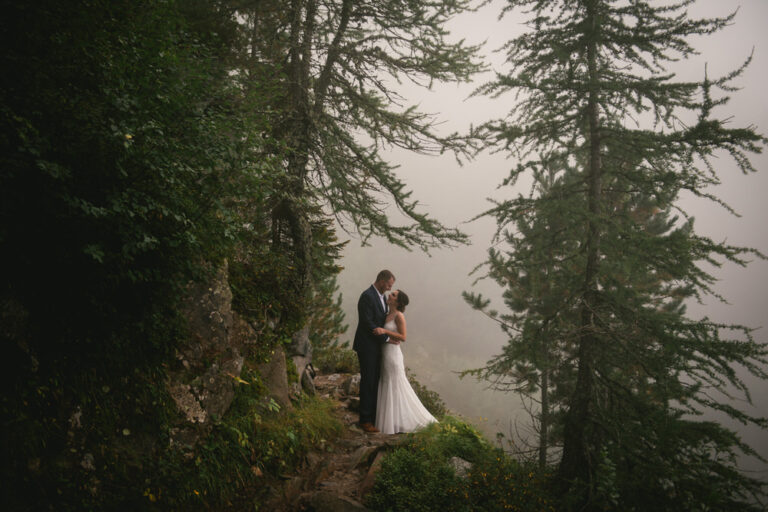
Eloping in Japan was not something I fully understood until I was standing in a cedar forest at 6am, watching light move through the trees like it had somewhere to be. No one else around for miles. This is why people come here. Not for the Instagram shot. For this exact feeling of being somewhere ancient and alive and completely present.
Japan calls to a specific kind of couple. The kind who doesn’t want a ballroom and two hundred people they half-know. The kind who wants their wedding day to actually mean something.
If that’s you, this guide is everything you need. 13 years of Japan elopements, real knowledge, no fluff.

Meet your elopement guide and photographer

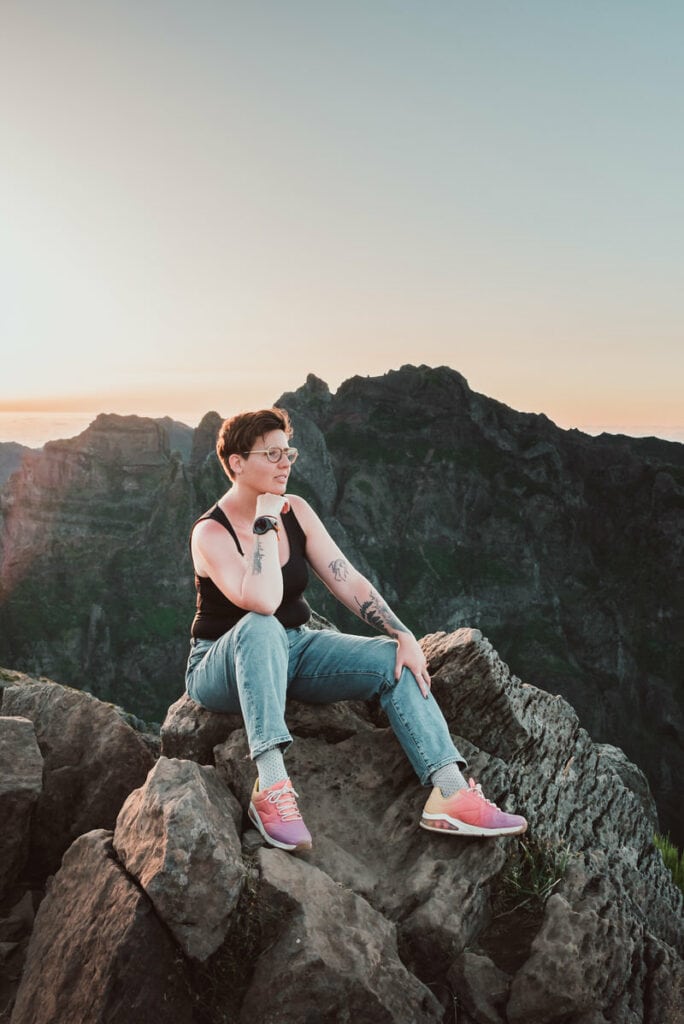
Hey, I’m Amber, the photographer and planner behind Zephyr & Luna, a destination elopement company I’ve been running since 2013. I work exclusively with anglophone couples, and I specialise in destinations that require real logistical expertise, like Japan.
I’ve planned and photographed Japan elopements across multiple seasons, regions, and ceremony styles, from private Shinto blessings in Kyoto shrine gardens to dawn ceremonies in ancient cedar forests to snowbound mountain elopements in Hokkaido. I know how the light moves in November in Arashiyama. I know which permit requests need to go in months ahead. I know what a couple needs to hear at 5:30am when it’s cold and the mist hasn’t lifted yet and they’re wondering if this was a good idea. (It always is.)
Japan keeps teaching me things, about slowness, about ritual, about what it means to pay attention. I don’t take couples there because it photographs well (though it does, extraordinarily). I take them there because it’s one of the few places left where the world slows down enough to let a moment actually land.
If that sounds like the kind of elopement you’re looking for, let’s talk →

That bridge is PERFECT for fall foliage photos!

Woman in traditional Japanese kimono for elopement photoshoot.

Getting ready for a Kaiseki dinner!

A few things that make working with me different:
It’s all-inclusive

Photography, planning, itinerary, logistics, permits, accommodation sourcing, local guiding, all handled. You show up. I handle the rest.

I follow a strict Leave No Trace ethic

Exact shoot locations are never shared publicly, only with booked clients. Japan’s sacred spaces deserve protection, not a flood of imitation shoots.

I speak your language (literally)

Every couple I work with is anglophone, and everything from first enquiry to final gallery delivery is clear, direct, and in English.

Pssst…You don’t have to carry this.

Eloping abroad can quickly turn into spreadsheets, permits, weather questions and second-guessing.
Instead, imagine every location vetted, every timeline built around real light and travel flow, and the entire experience both designed and photographed at an award-winning level.
You bring your story. The planning and the artistry are already handled.

Why Elope in Japan? (The Case for Japan)

There are a lot of beautiful places in the world to elope. Scotland gives you raw elemental landscape. Patagonia gives you wilderness so vast it makes you feel genuinely small. Iceland gives you terrain that barely looks like Earth.
Japan gives you all of that, and then it hands you 1,500 years of living cultural ritual to weave through your day.
That’s what no other destination can match. When you elope in Japan you’re not just choosing a backdrop. You’re stepping into a culture that has spent centuries developing ceremonies around intention, presence, and the meaning of moments. The tea ceremony. The Shinto ritual. The national obsession with seasonal change. All of it is available to you, woven into your day, if you want it.
And then there are four completely distinct seasons, each one a different elopement. Cherry blossoms in spring. Lush mountain green in summer. The whole country igniting in red and gold in autumn. Snow on ancient temple stone in winter. I’ll go deep on all of them in this guide.

ELopement in Japan - Forest wedding scene with couple at sunset.

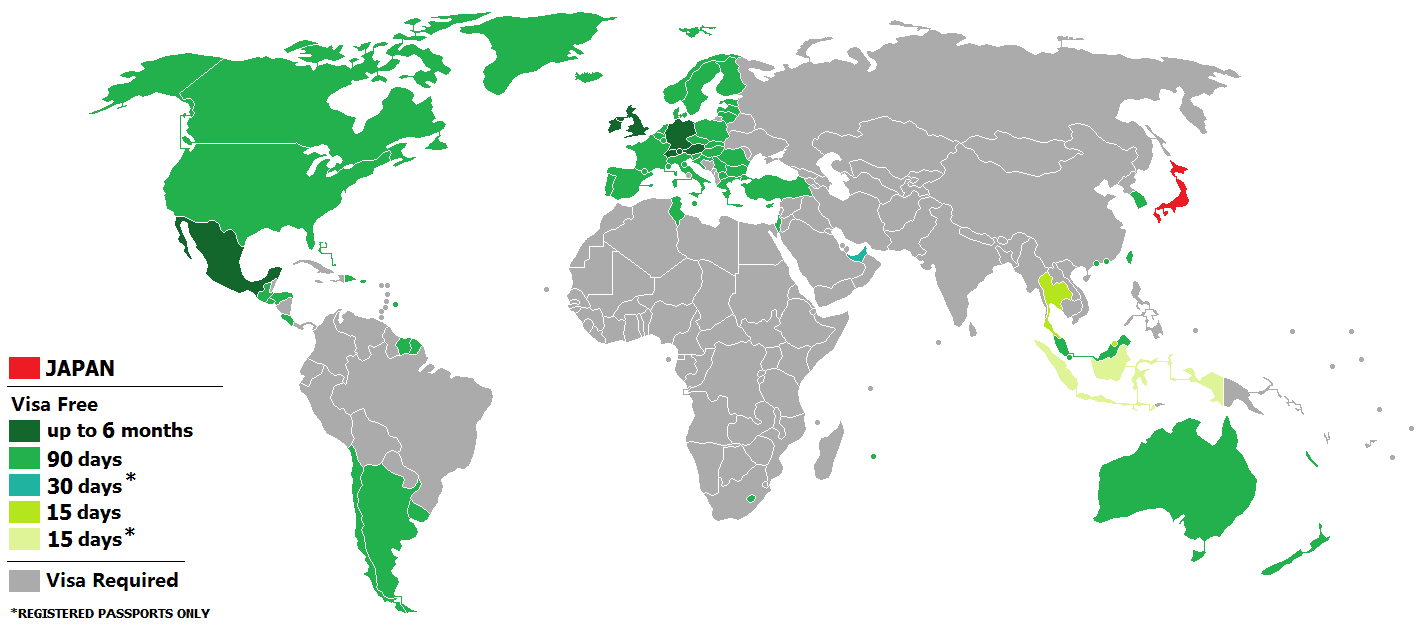
Can You Legally Elope in Japan as a Foreigner? (The Legal Reality)

Yes. And I’ll be straight with you: it’s one of the more involved legal processes among popular elopement destinations. Not impossible, but not a quick trip to city hall either. Here’s exactly how it works.

How legal marriage actually works in Japan

This surprises a lot of couples: in Japan, no ceremony makes you legally married. Not a Shinto shrine ceremony. Not a chapel wedding. Not anything. The only thing that creates a legal marriage in Japan is submitting a Kon-in Todoke (婚姻届, marriage registration form) to a local municipal office and having it accepted. The ceremony, however meaningful, is entirely separate.

What you’ll need

Every foreign national marrying in Japan must provide:

  • Kon-in Todoke form (available at any city or ward office, or downloadable from their websites)
  • Passport as primary ID
  • Certificate of Legal Capacity to Marry (婚姻要件具備証明書) proving you are single and free to marry, obtained from your home country’s embassy in Japan
  • Japanese translations of all documents (does not need to be professionally certified, any Japanese speaker can do it)
  • Two adult witnesses aged 20+ who sign the registration form with their name, address, and date of birth written in Japanese. They do not need to be physically present at the municipal office. Your photographer, planner, or a friend back home can sign in advance.

Nationality

Document needed

Embassy in Tokyo

Phone

Website

🇬🇧 UK

Marital Status Affirmation or Affidavit (£50 fee, apply online first)

British Embassy Tokyo, No.1 Ichiban-cho, Chiyoda-ku

+81 3 5211 1100

gov.uk/guidance/confirm-youre-free-to-get-married-in-japan

🇺🇸 US

Notarized sworn affidavit with apostille obtained stateside (as of September 2025, the US Embassy Tokyo no longer notarizes these)

US Embassy Tokyo, 1-10-5 Akasaka, Minato-ku

+81 3 3224 5000

jp.usembassy.gov/services/marriage

🇦🇺 Australia

Certificate of No Impediment (CNI), obtained in person at embassy

Australian Embassy Tokyo, 2-1-14 Mita, Minato-ku

+81 3 5232 4111

japan.embassy.gov.au · Email: [email protected]

🇨🇦 Canada

Marriage Affidavit, sworn in person at embassy. Note: Canada does not issue a standard CNI, but issues a statement in lieu

Canadian Embassy Tokyo, 7-3-38 Akasaka, Minato-ku

+81 3 5412 6200

international.gc.ca · Email: [email protected]

🇫🇷 France

Certificat de capacité matrimoniale, obtained from the French Embassy

French Embassy Tokyo, 4-11-44 Minami-Azabu, Minato-ku

+81 3 5798 6000

jp.ambafrance.org

Other

Contact your home country’s embassy in Japan directly

List of all embassies in Japan mofa.go.jp

Important US note: As of September 1, 2025, the US Embassy and consulates in Japan no longer notarize Affidavits of Competency to Marry. American couples now need to obtain a notarized sworn affidavit stateside with apostille, or a state-issued single status certificate, before traveling. Plan well ahead.

A few things that catch couples off guard

Use this paragraph section to get your website visitors to know you. Write about you or your organization, the products or services you offer, or why you exist. Keep a consistent communication style. Consider using this if you need to provide more context on why you do what you do. Be engaging. Focus on delivering value to your visitors.

Requirements vary by municipal office.

What one city hall accepts, another may question. Always call ahead to confirm specific requirements at the office where you plan to register. Most have limited English-speaking staff, so bringing a Japanese speaker is strongly recommended.

The date you submit the form is your legal marriage date

Regardless of when your ceremony takes place.

The certificate you’ll want to request

once registration is accepted is the Kon-in Todoke Juri Shomeisho (婚姻届受理証明書), your Certificate of Acceptance of Notification of Marriage. This is your only proof of marriage. Request it the same day, as the office does not issue it automatically.

Same-sex couples

Japan does not currently recognize same-sex marriage at the national level. Some municipalities such as Shibuya, Setagaya, and others in Tokyo offer partnership certificates, which are symbolic rather than legally binding. For legal marriage, this needs to happen in a country where it is recognized. Symbolic ceremonies in Japan are fully available and I welcome LGBTQ+ couples without reservation.

My honest take

The legal process is feasible. It’s also genuinely time-consuming, and most couples visiting Japan for one to two weeks find that embassy appointments and document gathering eat into days they had planned to spend actually experiencing Japan.
That’s why I steer most of my couples toward a different path. Chapter 4 → explains exactly what that looks like, and why for most people it’s not a compromise at all.

Pssst…You don’t have to carry this.

Eloping abroad can quickly turn into spreadsheets, permits, weather questions and second-guessing.
Instead, imagine every location vetted, every timeline built around real light and travel flow, and the entire experience both designed and photographed at an award-winning level.
You bring your story. The planning and the artistry are already handled.

Symbolic Ceremony vs. Legal Registration: What I Recommend

Elope in Japan under a traditional torii gate with a couple and officiant, capturing a romantic elop.
Let me be direct: the vast majority of couples I work with get legally married at home and come to Japan for the ceremony. Not because Japan is too complicated, though it can be. Because once I explain what a symbolic ceremony actually gives you, most couples realise it’s the better choice anyway.
Here’s what I mean
A Japanese bride in traditional attire poses elegantly at a temple in Shibuya, Tokyo.

What a legal Shinto ceremony in Japan looks like

If you go the full legal route with a Shinto ceremony, here’s the reality. The ceremony is conducted in Japanese, following a fixed ritual structure developed over centuries. You’ll be handed a romanised script for any spoken parts. The priest leads, the ritual unfolds, and it is genuinely beautiful. But it is not personal. You don’t write your vows. You don’t speak in your own language. The ceremony belongs to the tradition, not to you.
Which is fine, if that’s what you want. Some couples do. But most of mine don’t.

What a symbolic ceremony gives you instead

Everything the legal path can’t.
You write your own vows. You say them in English, in your own words, in a location you chose because it means something to you. You build the ceremony around your story, your rituals, your values. You can include a sake ceremony and kimono and a Shinto-inspired structure if you love the tradition of it, or you can stand in a cedar forest at dawn with nothing but each other and mean every word. There are no constraints.
The legal paperwork? A quiet ten-minute appointment at a registry office at home, usually a few days before you fly. It’s done. And then the day in Japan is your actual wedding day, fully and unapologetically.

The US exception

If you’re American, there’s a third option worth knowing about. Some US states allow couples to have their marriage license signed abroad. If your county clerk approves it, I’m legally ordained as a minister and can officiate your wedding in Japan with full legal standing. No Japanese bureaucracy, no embassy appointments, no city hall. Just the two of you, your vows, and a setting that will stop your heart. Get in touch and I’ll help you figure out if your state qualifies.

So which path is right for you?

Close-up of marriage book and certificate adorned with greenery and wedding ring.

Choose legal registration in Japan if:

  • You specifically want your marriage certificate to say Japan
  • You’re already based in Japan and the logistics are simple
  • You’re a US couple in a qualifying state (see above)

Choose symbolic ceremony if:

  • You want to write and say your own vows in English
  • You want full creative control over your ceremony
  • You’re visiting Japan for a limited time and don’t want documents eating into it
  • You want the day to feel entirely like yours

One thing I want to say clearly: a symbolic ceremony is not a lesser wedding. Some of the most emotionally devastating ceremonies I have ever witnessed and photographed were symbolic. The piece of paper is not what makes it real. The words do. The place does. The decision to show up for each other, away from everything familiar, in one of the most extraordinary places on Earth, does.

Pssst…You don’t have to carry this.

Eloping abroad can quickly turn into spreadsheets, permits, weather questions and second-guessing.
Instead, imagine every location vetted, every timeline built around real light and travel flow, and the entire experience both designed and photographed at an award-winning level.
You bring your story. The planning and the artistry are already handled.

The Best Locations to Elope in Japan

Japan is roughly 70% mountains and hilly terrain. It has ancient cities, subtropical islands, volcanic wilderness, cedar forests that are thousands of years old, and coastlines that barely get photographed. Choosing where to elope here is genuinely one of the more enjoyable planning problems I help couples work through.
Here’s my honest breakdown of every location I work with, and who each one is right for.

Kyoto

Kyoto is the one everyone imagines when they think of Japan. Ancient shrines, bamboo groves, moss-covered gardens, vermillion torii gates, stone-paved alleyways, lantern-lit streets. It is the most photographically dense city I have ever worked in. In a single day I can take a couple from a cedar forest at dawn to a private garden ceremony mid-morning to portraits along the historic lanes of Higashiyama at dusk. No other city in Japan gives you that range.
What I need to tell you honestly: Kyoto has become increasingly strict about commercial photography and ceremonies in its heritage districts, particularly since 2024. Many of the spots you’ve seen all over Instagram now prohibit professional photography without prior permission, and some iconic locations have been closed to ceremonies entirely. This is a good thing for the spaces. It does mean you need someone who knows which locations are properly permitted and which are not.
The neighbourhoods I work in most: Arashiyama for bamboo forest and temple garden access. Higashiyama for lantern-lit stone streets and hillside shrine approaches. Fushimi for torii gate alternatives away from the main tourist crush. Northern Kyoto for the quietest, most atmospheric temple gardens.

  • Best season: Late March to mid April for cherry blossom. November for momiji foliage. Winter is underrated — thin crowds, bare garden aesthetics, extraordinary quiet.
  • Permit note: Required for all private gardens, shrine ceremonies, and heritage district photography. Some of Kyoto's most iconic locations restrict or prohibit commercial photography entirely. I handle all permit applications for every elopement I plan here.
  • Right for: Couples drawn to deep cultural atmosphere, ancient architecture, and a day that moves through multiple distinct settings.

Tokyo

Tokyo surprises people. Most couples don't consider it for an elopement because they picture crowds and neon, not intimacy. What they don't picture is the neighbourhood shrine tucked between apartment buildings where nobody else is standing. The landscaped park with no one in it at 7am. The rooftop at golden hour with the city glittering below. The old-town street in Yanaka that looks like it belongs to a different century.
That contrast is the whole point of a Tokyo elopement. It doesn't feel like anywhere else. It's dynamic and layered and endlessly interesting, and when you find the quiet pockets inside it the intimacy is extraordinary because you know what's just outside.
The areas I love most for elopements: Yanaka for old-town atmosphere. Kagurazaka for cobbled alleys and hidden gardens. Shimokitazawa for neighbourhood shrines with genuine character. Kamakura as a day trip, for the giant Buddha, coastal temples, and hillside forest paths just an hour from the city.

  • Best season: Spring and autumn. Winter for crisp clear days and thin crowds. Summer for couples who love heat and energy.
  • Permit note: Public parks and gardens require advance permission for ceremonies. Shrine ceremonies need to be booked through the shrine directly. Natural outdoor locations are generally more accessible here than in Kyoto.
  • Right for: Couples who want contrast, energy, and a day that feels cinematic and contemporary as well as culturally layered.

Mount Fuji

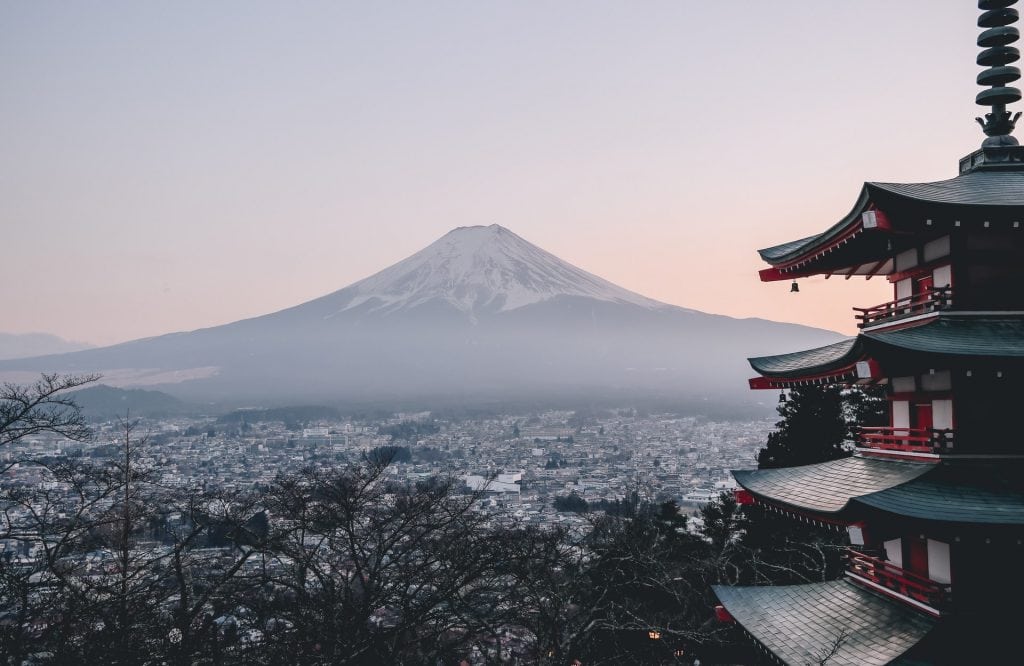
There is nothing quite like having Fuji behind you. The mountain is so visually dominant that it changes the entire emotional register of a photograph. I've shot at the Fuji Five Lakes, in the forest trails of the Aokigahara, on highland paths with the summit clear above the treeline, and at dawn viewpoints where the mountain reflects perfectly on still water. It is genuinely iconic for a reason.
What I'll be honest about: Fuji's weather is famously unpredictable. The mountain disappears into cloud regularly and without warning. I always build contingency plans into Fuji elopements and I never promise the summit will be visible. When it is, there's nothing better. When it isn't, we work with what the landscape gives us, and the forests and lakes are extraordinary regardless.

  • Best season: Winter for the clearest views of the summit and snow-capped drama. Late March to April for cherry blossoms with Fuji behind them. Autumn for foliage and crisp air.
  • Permit note: Some areas around Fuji require advance permits, particularly at popular viewpoints that can book out months ahead. I handle this.
  • Right for: Couples who want Japan's most iconic backdrop. Adventurous couples who are comfortable with weather unpredictability.

Hokkaido (Niseko and Furano)

Hokkaido is Japan's northernmost main island and it feels like a completely different country. Wide volcanic landscapes, enormous skies, cedar forests, almost no crowds compared to Honshu. For couples who want something visually dramatic and physically remote rather than culturally traditional, this is where I send them.
Niseko in winter is one of the most cinematic places I have ever worked. Deep powder snow, onsen steam rising from forest pools, the near-perfect volcanic cone of Mount Yotei visible across the valley. That particular quiet that only comes with snowfall. It is extraordinary. Summer and autumn Niseko brings lush green hillsides, wildflower meadows, and mountain air that makes you feel properly alive.
Furano is softer and more pastoral. Famous internationally for its lavender fields rolling across hillsides in July and August, it is beautiful in every season: sunflowers in late summer, vivid autumn colour in October, deep snow through winter. If you want a Japan that feels far from tourist circuits and close to countryside, Furano is the answer.

  • Best season: January to March for snow in Niseko. July to August for Furano lavender. October for autumn across both.
  • Permit note: Natural outdoor locations here are generally more accessible than Kyoto or Tokyo. Most of the locations I use in Hokkaido require minimal permitting.
  • Right for: Adventure couples. Winter elopement couples. Anyone who wants dramatic landscape without the cultural heritage district logistics.

Nara

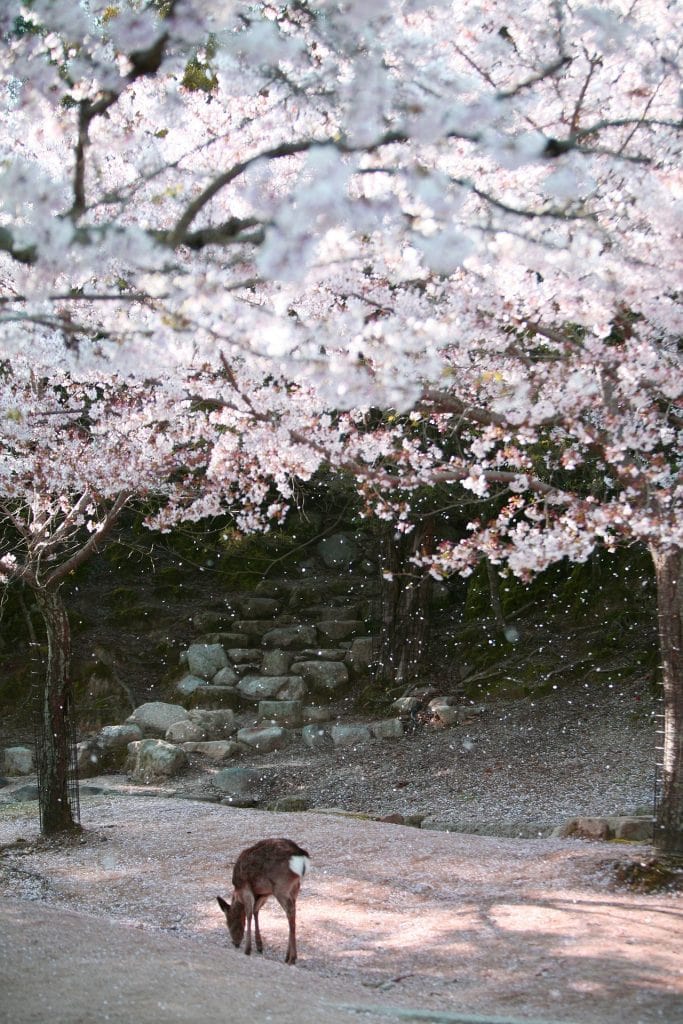
Nara is the one I recommend when couples want something quieter than Kyoto without sacrificing any of the ancient atmosphere. It's just 45 minutes from Kyoto by train and feels like a different world. Sacred deer roam freely through the park. The temples here are among the oldest in Japan. The light in the early morning, before the day-trippers arrive, is something I look forward to every time I go.
It works beautifully as a standalone elopement destination or paired with a Kyoto day. For couples who want cultural depth with more breathing room and less permit complexity, Nara is genuinely underrated.

  • Best season: Spring and autumn. Early morning in any season to get ahead of the crowds.
  • Permit note: Less restrictive than Kyoto. Many outdoor locations accessible without formal permits.
  • Right for: Couples who want ancient atmosphere without the Kyoto logistics. Anyone who has a soft spot for deer.

Yakushima

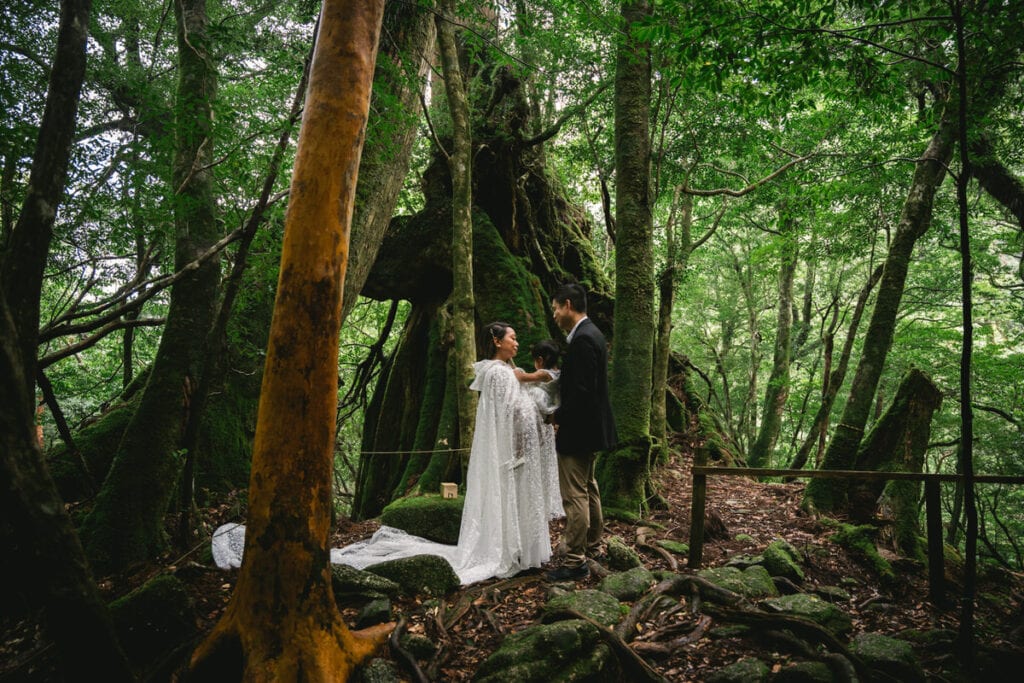
Yakushima is the wild card in my Japan portfolio and honestly one of my favourite places to work anywhere in the world. This small island off the southern tip of Kyushu is home to ancient cedar forests, some of the trees estimated to be over 7,000 years old. The island receives more rainfall than almost anywhere in Japan which means it is permanently lush, permanently atmospheric, permanently covered in moss and mist and the particular green that only comes from that much water. It was the inspiration for the forest in Studio Ghibli's Princess Mononoke and you feel that the moment you walk into the trees.
Getting here requires a flight or ferry from Kagoshima, and the logistics are more involved than other destinations. The hiking can be strenuous. None of that has put off the couples I've brought here, because what they find when they arrive is unlike anything else in Japan.

  • Best season: May and June before the summer crowds. September and October for cooler temperatures and dramatic atmosphere.
  • Permit note: Trail access is straightforward. Some areas of the forest require coordination with local guides for deeper access.
  • Right for: Adventurous couples. Anyone drawn to ancient, primeval landscape. Couples who want their elopement to feel genuinely remote.

Okinawa and Miyakojima

Subtropical Japan. If your elopement vision involves turquoise water, white sand, and golden hour light at a beach ceremony, this is where you want to be. Okinawa is a completely different Japan from anything on Honshu, warm and relaxed and visually lush in a way that feels almost Southeast Asian.
Miyakojima is my specific recommendation within Okinawa prefecture. The water here is some of the clearest I have ever seen. The beaches are extraordinary. And relative to its beauty, it remains genuinely undiscovered by international couples, which means the locations feel private and the photography conditions are exceptional.

  • Best season: November to April. Avoid June to September for typhoon season and intense summer heat.
  • Permit note: Beach locations are generally accessible. Some private resort beaches require coordination.
  • Right for: Couples who want a tropical elopement. Beach ceremony couples. Anyone who wants Japan in warm weather.

The Japanese Alps (Hakuba and Kamikochi)

The Japanese Alps run through the centre of Honshu and offer mountain elopement conditions that rival anything in Europe. Hakuba is best known as a ski destination but in every season it is extraordinary: deep snow and cedar forest in winter, wildflower meadows and alpine clarity in summer. Kamikochi is a protected highland valley accessible only on foot or by bus, with the Azusa River running through it and the peaks of the Northern Alps above. I consider it one of the most beautiful places in Japan.
These locations require more logistical planning than city-based elopements, particularly Kamikochi which has strict access controls. For couples who want genuine mountain landscape and the feeling of being properly away from everything, the effort is completely worth it.

  • Best season: Late April to November for Kamikochi (it closes in winter). January to March for Hakuba snow elopements.
  • Permit note: Kamikochi has controlled vehicle access. Elopements here require advance coordination. I handle all of it.
  • Right for: Mountain couples. Couples who want dramatic alpine landscape. Anyone who wants their Japan elopement to feel genuinely adventurous.

A note on secret locations

Every location I've listed here is one I'm comfortable naming publicly. But the spots I'm most protective of are the ones I don't name at all.
I follow a strict Leave No Trace ethic: exact shoot locations are never shared publicly, on social media, or in this guide. The places that produce the most extraordinary elopement images are also the most fragile. Sharing them widely would damage them. When you book with me, I'll send you a custom list of four to five location options matched specifically to your vision, your season, and your values. Including some places I've never photographed anyone else in.
That's part of what you're booking when you work with me. Not just a photographer. A guide who knows where to take you.

Pssst...You don't have to carry this.

Eloping abroad can quickly turn into spreadsheets, permits, weather questions and second-guessing.
Instead, imagine every location vetted, every timeline built around real light and travel flow, and the entire experience both designed and photographed at an award-winning level.
You bring your story. The planning and the artistry are already handled.

Best Time of Year to Elope in Japan (Season by Season)

One of the first questions I get from every couple is: when should we go? The honest answer is that Japan is extraordinary in every season, and the right time depends entirely on what you want your day to feel like. What I can do is give you the real picture of each season so you can choose with your eyes open.

Spring: late March to mid May

Spring is Japan's most romantic season and its most chaotic. The cherry blossoms (sakura) transform the entire country for roughly two weeks per region, and those two weeks are unlike anything else on Earth. Pink and white clouds over temple gates, petals on still water, the particular softness of the light in early April. I understand completely why couples chase this.

What I need you to know

eEeryone else is chasing it too. Peak sakura in Kyoto and Tokyo is genuinely crowded in a way that requires planning. The famous spots at 10am on a Saturday in late March are not intimate. Early mornings (before 7am) and working with me on crowd-free alternatives makes all the difference.

Golden Week warning

The Japanese public holiday cluster running from late April to early May sees domestic tourism spike dramatically. Accommodation prices jump, transport is packed, and venues book out. If your dates fall in this window, plan and book everything significantly earlier than you think you need to. If you have flexibility, the second half of May is one of my favourite times in Japan: blossoms finished, greens vivid, crowds gone, weather warm.

Bloom timing by region

- Okinawa: late January to early February
- Kyushu (Fukuoka): mid to late March
- Kyoto and Tokyo: late March to early April
- Tohoku: mid to late April
- Hokkaido: late April to early May
For the most accurate forecasts I track the Japan Meteorological Corporation's sakura forecast (sakura.weathermap.jp), updated annually from January. Bloom dates shift by one to two weeks year to year so I don't lock in location decisions until the forecast is out.

What if the sakura don't bloom on my date?

This is the question I get from every spring couple and the answer is: we work with what Japan gives us. The days just after peak bloom, when the petals are falling, are honestly some of the most beautiful I've ever photographed. And Japan in late March or April without cherry blossoms is still extraordinary. I never build an elopement that lives or dies on a single natural phenomenon.

Summer: June to August

I'll be straight with you: June and July are rainy season across most of Japan. Warm, humid, and wet in a persistent rather than dramatic way. It's not ideal for outdoor ceremonies and I generally steer couples away from this window unless they're specifically drawn to lush overgrown greenery and don't mind rain.
August is hot and humid to a degree that surprises most visitors from Europe or North America. Think 35°C and 80% humidity in major cities. Beautiful if you love that kind of heat. Genuinely uncomfortable if you don't.
The exception is Hokkaido. Japan's northern island sits outside the main rainy season and stays cooler through summer. Niseko and Furano in July and August are lush, clear, and spectacular. Lavender fields in Furano peak in mid to late July. If summer is your only option and you want outdoor landscapes, Hokkaido is where I'll take you.

Autumn: late September to late November

Autumn is my personal favourite season in Japan, and if you ask me to pick the single best time to elope here, this is it.
The momiji (Japanese maple foliage) is the sakura's equal in sheer visual impact. Reds, oranges, and deep golds across temple gardens and mountain forests. The air turns crisp and clear. The light at golden hour in November in Kyoto is the best light I know of anywhere. And while autumn still draws crowds, the atmosphere is warmer and slower than spring. It feels more like the Japan I fell in love with.

Elopement of a couple in Japan surrounded by colorful fall foliage.

November in Kyoto specifically

is worth its own mention. The temple gardens hold their colour longer than almost anywhere else in Japan. Eikan-do, Tofuku-ji, Rurikoin. The combination of ancient architecture and autumn foliage on a clear November morning is something I have photographed dozens of times and it still stops me.
My practical advice: aim for the second half of October in Hokkaido and the Alps, and the first three weeks of November in Kyoto, Tokyo, and Kansai. Early October across most of Japan is a beautiful transitional period with comfortable temperatures and the first hints of colour arriving.

Couple enjoying an elopement in a lush forest in Japan, surrounded by autumn foliage.

Winter: December to February

Winter is the most underrated season for a Japan elopement and I want to make the case for it properly.
Kyoto in winter is stripped back and extraordinarily quiet. Bare branches against ancient stone walls. Moss gardens dusted with frost. The tourist crowds thin to almost nothing and the city feels like it belongs to you. The light is low and soft and the photographs are some of the most elegant I've ever made here.
Hokkaido in winter is a completely different proposition: deep powder snow, onsen steam rising from cedar forest pools, mountain peaks above the valley, a silence that is almost physical. Niseko and Hakuba in January and February are genuinely cinematic.
Shinto ceremony timing note: Most shrines stop hosting ceremonies from around mid December as they prepare for New Year (Shōgatsu), one of the most important periods in the Japanese calendar. Shrines reopen for ceremonies from around mid January. If a Shinto ceremony is part of your plan and you're considering late December or early January, contact me early so I can check specific shrine availability.
What winter is right for:
Snow elopements: Niseko, Hakuba, Nagano (January to February)
Quiet cultural atmosphere: Kyoto, Nara (December to February, avoiding New Year week)
Clear Fuji views: the summit is most visible in winter

Romantic couple sharing a kiss during a winter elopement in Japan's snowy landscape.

Timing table

Kyoto

Tokyo

Mount Fuji

Hokkaido

Okinawa

Japanese Alps

Jan-Feb

Mar-Apr

May

Jun-Jul

Aug

Sep-Oct

Nov

Dec

Pssst...You don't have to carry this.

Eloping abroad can quickly turn into spreadsheets, permits, weather questions and second-guessing.
Instead, imagine every location vetted, every timeline built around real light and travel flow, and the entire experience both designed and photographed at an award-winning level.
You bring your story. The planning and the artistry are already handled.

Japan Elopement Cost: Real Numbers

The most common thing I hear when couples start researching Japan elopements is "I had no idea it would cost that much." The second most common thing I hear, from couples who've already been, is "I wish we'd spent more."
Let me give you the real numbers so you can plan properly.

Total ballpark

A complete Japan elopement (photography, planning, ceremony, hair and makeup, florals, and venue) typically lands somewhere in these ranges:

JPY

USD

AUD

GBP

Entry level

¥1,060,000

$6,665

$10,500

5,200

Mid-range

¥1,900,000

$11,900

$18,800

9,300

Full-service bespoke

¥3,920,000+

$24,600+

$38,800+

19,200+

These figures cover vendor costs only. Your flights, accommodation, and personal travel expenses are on top.

Line by line

Photography: ¥550,000 to ¥1.500.000 ($3,500 to $9,000 USD)

The single most important investment you'll make. Half-day ceremony coverage starts around ¥550,000. Full-day multi-location coverage with an experienced photographer runs ¥750,000 to ¥1.500,000. Beyond that you're in specialist or high-demand territory. More on this below.

Planning and coordination: ¥250,000 to ¥800,000 ($1,500 to $5,000 USD)

Covers location research, permit applications, vendor sourcing, timeline building, local guiding, and on-the-day coordination. The range reflects complexity: a single location ceremony in Kyoto requires less coordination than a two-day multi-location experience across regions.

Venue and permit fees: ¥0 to ¥1,000,000 ($0 to $6,500 USD)

This is the widest range of any line item because the spread is genuinely that large.
- Natural outdoor locations (forest trails, mountain viewpoints, coastal paths): often free
- Private Japanese gardens: ¥50,000 to ¥250,000
- Shrine ceremonies in Tokyo: ¥130,000 to ¥200,000
- Shrine ceremonies in Kyoto: ¥200,000 to ¥500,000
- Private ryokan or villa buyout: can reach well beyond this for full-day exclusive access

Hair and makeup: ¥80,000 to ¥160,000 ($500 to $1,000 USD)

Tax and transaction fees additional. For a specialist who travels to your location rather than requiring you to travel to a salon, expect the higher end.

Florals: ¥30,000 to ¥120,000 ($200 to $790 USD)

Japan is not inexpensive for florals. A simple bridal bouquet starts around ¥30,000. A floral arch for a ceremony location can reach ¥100,000 to ¥120,000 including delivery and assembly. If flowers are important to you, budget accordingly.

Celebrant/officiant: ¥80,000 to ¥160,000 ($500 to $1,000 USD)

Covers ceremony writing, coordination, and officiating. Travel surcharges apply for remote locations.

Kimono dressing with specialist kitsuke-shi: ¥40,000 to ¥100,000 ($265 to $660 USD)

Includes the dressing session with a trained specialist. Kimono rental, if not included, adds ¥30,000 to ¥80,000 on top. Worth every yen if this is part of your day.

Private transport and driver: ¥30,000 to ¥80,000 ($200 to $530 USD)

Non-negotiable in my view for an elopement day in a city. No hunting for parking, no missed trains, no logistics stress. A private driver who knows the locations and the timing is one of the best investments you can make.

Cost differences by location

Elope in Japan: Romantic forest wedding with couple on stone bridge surrounded by lush greenery.

Peak vs off-peak

Cherry blossom season (late March to mid April) and autumn foliage season (November) are peak periods across Japan. During these windows:
Popular venues and photographers book out sometimes 12 months ahead
Accommodation prices in Kyoto can increase by 30 to 50%
Some permit locations operate a one-per-day rule that fills far in advance
Off-peak (January to February outside ski resorts, May, June with caveats, September) gives you more flexibility on dates and locations, more responsive vendors, and lower accommodation costs. For couples with date flexibility, May is genuinely exceptional value and one of the most beautiful months in Japan.

What you're actually paying a full-service planner for

When couples see a planning fee they sometimes wonder what exactly it covers. Here's the invisible work.
I spend months before your day making phone calls in Japanese to shrine administrators, municipal offices, garden curators, and local vendors. I know which locations have changed their permit policy since last season. I know which photographers work well under pressure and which don't. I know the municipal office in your ceremony ward opens at 8:30am and that you need to arrive with a Japanese speaker. I know the mountain road to your viewpoint closes if there's overnight snowfall and I have an alternative ready.
None of that appears on your timeline. It's why your day flows.

Legal registration costs

If you're pursuing legal registration in Japan, add:
- Embassy document fees: ¥10,000 to ¥30,000 per person depending on nationality (UK affirmation: £50 / Australian CNI: approx. AUD $120 / Canadian affidavit: approx. CAD $60)
- Japanese translation services if not included with your embassy documents: ¥5,000 to ¥30,000
- Certificate of Acceptance of Notification of Marriage from city hall: ¥350 to ¥1,400 depending on format
The registration itself is free. The days it takes to get there are not.

What not to cheap out on

Photography. I will always say this and I will always mean it.
Your Japan elopement photographs are what you'll have when the day is over. The location, the light, the ceremony, the expressions, all of it exists only in those images. A photographer who knows Japan, knows light, knows how to move a couple through a day without making it feel like a shoot, and knows how to handle a permit rejection or a weather change without it becoming the story: that is not a commodity. It is the difference between images you look at once and images you look at for the rest of your life.
I've seen couples save money on photography and spend the rest of their lives wishing they hadn't. I've never seen it go the other way.

Pssst...You don't have to carry this.

Eloping abroad can quickly turn into spreadsheets, permits, weather questions and second-guessing.
Instead, imagine every location vetted, every timeline built around real light and travel flow, and the entire experience both designed and photographed at an award-winning level.
You bring your story. The planning and the artistry are already handled.

Permits: What You Need, Where, and How to Get Them

This is the chapter most elopement guides skip, get wrong, or treat with one vague paragraph. I'm going to give you the real picture because it's one of the things that separates a smooth Japan elopement from a derailed one.

What generally requires no permit

Most natural outdoor locations in Japan are accessible without formal permits for a simple ceremony. This includes:

  • Forest trails and woodland paths
  • Mountain viewpoints and highland routes
  • Coastal cliffs and beaches (outside designated private resort areas)
  • Quiet countryside paths and rural roads
  • Most riverbanks outside city heritage zones

What always requires permission

Romantic couple eloping in a lush Japanese garden with traditional bridge and lanterns.

Kyoto-specific restrictions

Kyoto deserves its own section because the restrictions here are stricter and more actively enforced than anywhere else in Japan, and they have tightened significantly since 2024 as part of the city's broader response to over-tourism.

Discover the enchanting Arashiyama Bamboo Grove in Kyoto, Japan, with strolling visitors enhancing its natural beauty.

Arashiyama Bamboo Grove

The main grove path is public but commercial photography sessions and organized ceremonies are prohibited. Enforcement has increased. The private gardens adjacent to the grove are accessible through proper booking and produce equally extraordinary results without the risk.

Vibrant orange torii gates at Fushimi Inari Shrine in Kyoto, Japan, showcasing traditional Japanese architecture.

Fushimi Inari

The main torii gate paths are freely accessible but organized ceremonies are not permitted. The upper reaches of the mountain are quieter and offer genuine solitude at the right hour, but even there a formal ceremony setup would attract attention.

A serene evening scene capturing traditional rooftops in the historic Higashiyama district, Kyoto, Japan.

Higashiyama heritage streets (Ninenzaka, Sannenzaka, Ishibei Koji)

These stone-paved lanes are among the most photographed streets in Japan and among the most restricted for commercial work. Professional photography requires prior permission. Ceremonies on these streets are not permitted.

Back view of anonymous female pedestrian in casual clothes with bags in hand walking along paved street near aged houses in Kyoto

Gion district

The geisha district is particularly sensitive. Photography restrictions in the Hanamikoji area are actively enforced by neighbourhood patrol volunteers. Organized photography sessions here require careful coordination and in some sub-areas are not available at all.

Charming historic street in Kyoto featuring traditional wooden buildings and a stone staircase.

What this means practically

Almost every iconic Kyoto location you've seen on Instagram requires either advance permission or a permitted alternative. I know which is which, and I know the alternatives that are equally beautiful and properly accessible. The best Kyoto elopement images I've made have rarely been at the most famous spots.

Mount Fuji permit specifics

The Fuji Five Lakes area and the trails and viewpoints around the mountain involve a patchwork of land administration across prefectures, municipal governments, and private landowners. There is no single permit system.
What I navigate for Fuji elopements:

Scenic view of Mount Fuji during winter with grasses in the foreground and a cloudy sky.

Popular viewpoints

at Kawaguchiko and Yamanakako operate on limited daily access for commercial photography. Some book out months in advance in cherry blossom season and autumn. Arriving without a booking at a location operating this system risks being turned away.

Adventurous hikers climb Mount Fuji, enjoying breathtaking views at sunrise in Fujinomiya, Japan.

Trail access

to higher elevation points requires coordination with local forest administration and in some areas a registered local guide.

Mount Fuji visible behind a 7-Eleven store sign in Shizuoka, Japan.

Private land access

for the most dramatic and private viewpoints requires direct relationships with landowners, which I maintain through my network of local contacts.

The one-permit-per-day rule applies at several of the most iconic Fuji viewpoints. This means there is one commercial photography booking allowed per day at that location. If that slot is taken when you inquire, the location is unavailable for your date. For peak season Fuji dates I begin permit applications as early as six months ahead.

The one-permit-per-day rule

Several locations across Japan, not only around Fuji, operate this system. The rationale is protecting the space from repeated commercial use on a single day. In practice it means:

  • The location cannot be double-booked
  • Your inquiry is time-sensitive once your dates are confirmed
  • Waiting creates real risk of losing the location entirely

This is one of the more stressful parts of Japan elopement logistics to manage and one of the clearest reasons to work with someone who has existing relationships with these locations. A cold inquiry from a couple who've never worked at a location before is treated very differently from an inquiry from a planner with a years-long track record there.

What happens if you skip permits

Beautiful couple embracing during a Japan elopement ceremony in lush forest setting.

I have seen this go wrong and I'll be direct about the consequences.
Shrine staff will stop your ceremony. They are not unkind about it but they are firm. If you have set up a ceremony at a shrine without booking through the administration, you will be asked to stop. Your photographer cannot intervene. Your planner cannot negotiate. The ceremony is over.
In heritage districts, local patrol volunteers or municipal officials will approach your photographer and ask for documentation. Without a permit there is no documentation. The session stops.
At permit-required viewpoints, you may be asked to leave. In some cases a fine is issued for commercial activity without authorisation.
Beyond the practical consequences, there is a cultural dimension I take seriously. Japan's sacred spaces and historic areas are not backdrops. They are living places, administered by people who care deeply about them. Treating them as freely available for whatever you want to do is disrespectful in a way that matters to me and to the communities that maintain these spaces. I don't work that way and I won't.

How I handle permits for clients

Every permit for every elopement I plan is my responsibility, not yours. This includes:

  • Identifying which locations require what kind of permission
  • Making contact with shrine administrations, garden curators, municipal offices, and private landowners in Japanese
  • Submitting applications with the required documentation and lead time
  • Managing the one-per-day booking windows for restricted locations
  • Building alternatives for every permitted location in case of rejection or unavailability
  • Briefing you on any behavioural requirements at permitted venues (attire, noise, photography boundaries) before your day

You will never arrive at a location on your elopement day and discover it wasn't properly sorted. That's not a risk I let exist.

Pssst...You don't have to carry this.

Eloping abroad can quickly turn into spreadsheets, permits, weather questions and second-guessing.
Instead, imagine every location vetted, every timeline built around real light and travel flow, and the entire experience both designed and photographed at an award-winning level.
You bring your story. The planning and the artistry are already handled.


Traditional Japanese Elements to Include in Your Elopement


One of the things that makes Japan unlike any other elopement destination is the depth of cultural ritual available to you. None of it is obligatory. But for couples who want their day to be more than a photograph in a beautiful place, what Japan offers here is extraordinary.
Here's everything I incorporate into Japan elopements, with honest notes on what each element actually involves.

Kimono

Wearing kimono for your elopement is one of the most transformative choices you can make. Not because it photographs well, though it does. Because putting on a kimono is a ritual in itself. It takes time, it requires care, and by the time you're dressed you are already in a different relationship with the day.

San-san-kudo (三三九度)

The sake ceremony is the ritual heart of a traditional Shinto wedding. Three cups of sake, each sipped three times, shared between the couple. The number three is considered auspicious in Shinto tradition and the three sips from three cups symbolise the union of two people across past, present, and future.
What I love about this ritual for elopements is how well it translates outside the formal Shinto context. I incorporate san-san-kudo into symbolic ceremonies regularly. All it requires is a sake set (I source beautiful lacquerware sets for couples who want this), the sake itself, and the intention behind it. The ceremony takes about three minutes and carries an emotional weight that is completely disproportionate to its simplicity.
If your ceremony includes vows and an exchange of rings and you want one Japanese ritual element to anchor it in the culture, this is the one I'd recommend.

Japanese Shinto wedding procession with traditional attire at a shrine in Nara, Japan.
  • Remove shoes when entering the inner shrine
  • Bow at the torii gate on entering
  • Follow the priest's instruction on movement and positioning
  • Keep voices low throughout
  • Photography rules vary by shrine and must be confirmed in advance

Shinto ceremony

A Shinto ceremony is a profound and genuinely beautiful experience. I want to be honest with you about what it involves so you can decide whether it's right for you.
The ceremony is conducted by a Shinto priest in Japanese, following a ritual structure that has remained largely unchanged for centuries. It includes the recitation of norito (ritual prayers), the exchange of symbolic offerings, the san-san-kudo sake ritual, and in some ceremonies the exchange of rings. You are given a romanised script for any spoken parts. The pace is slow and deliberate.

Tea ceremony (茶道, sadō)

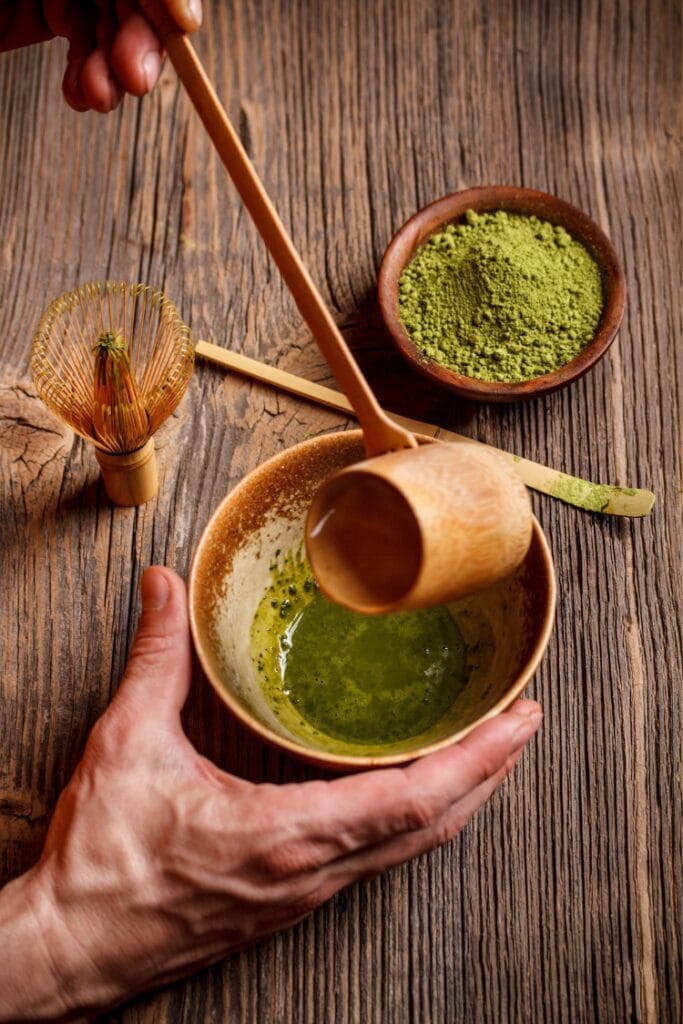
A private tea ceremony with a tea master is one of the most genuinely grounding experiences I build into elopement days. It asks you to be completely present. The host prepares the tea with unhurried, practiced precision. You receive it, hold the bowl, drink, and sit in the particular stillness that only this ritual seems to produce.
I use it in two ways depending on the couple. For some, it's a ceremony element in itself: a slow, meditative exchange before or after vows that sets a tone of complete presence. For others, it's an anchor moment built into the day's flow, usually in the late morning, as a deliberate pause between locations.
The tea ceremony does not require any prior knowledge or experience. The tea master guides you through. What it requires is the willingness to slow down, which is honestly one of the harder things I ask of couples on their elopement day.
A private ceremony with a specialist runs ¥20,000 to ¥50,000 depending on the location and the master.

A detailed view of a traditional Japanese tea ceremony with teapot and utensils.
A close-up of an elegant ceramic vase featuring gold kintsugi on exhibit.

Kintsugi unity ceremony

Kintsugi (金継ぎ) is the Japanese art of repairing broken pottery with gold. The philosophy behind it: breakage and repair are part of an object's history, not something to hide. The repaired piece is more beautiful for having been broken.
I have incorporated this into elopement ceremonies for couples who bring their own fragments of something meaningful and join them into a single piece with gold lacquer during their ceremony. Two halves becoming one. The symbolism writes itself, and unlike most unity ceremonies I've encountered it doesn't feel contrived. It feels like Japan.
A kintsugi workshop session with a master runs ¥15,000 to ¥40,000. For couples who want this as a ceremony element rather than a workshop, I source the materials and brief the couple in advance so the joining can happen as part of the ceremony itself.

Forest bathing (shinrin-yoku)

Shinrin-yoku (森林浴, literally forest bathing) is the practice of slow, attentive immersion in a forest environment. It is not hiking. It is not exercise. It is walking slowly, breathing deliberately, and allowing the forest to do what forests do to human nervous systems when you let them.
I build forest time into Japan elopements for couples who want their day to include moments of genuine stillness. Not as an activity. As an anchor. The difference between a day that rushes from location to location and a day that breathes is often one 20-minute forest walk with no camera out and nowhere to be.
Yakushima is the most extraordinary forest bathing environment I've ever been in. The ancient cedar forest on that island does something to people that I've never managed to fully put into words. Arashiyama in the early morning before the crowds arrive is the more accessible alternative.

Onsen

A private onsen soak is one of the most deeply restorative things you can do after an elopement day, and I recommend planning for it.

Private vs public: Public onsen (communal baths) are gender-separated and tattoos are prohibited at many establishments, which matters for some international couples. Private onsen rooms (貸切風呂, kashikiri buro) are bookable by the hour at most ryokan and give you a completely private soak, often with extraordinary views. This is the option I recommend for elopement days.

Timing: I generally plan onsen for the end of the day rather than before it. Post-ceremony, post-photography, post-everything. You've said your vows, you've been photographed, you're done performing for any camera. Getting into a cedar wood tub with hot mineral water and the forest outside the window is the right note to end a Japan elopement day on.

Ryokan with private onsen I recommend as both accommodation and elopement day venue for couples who want a fully immersive experience. Waking up in a tatami room, dressing in yukata for breakfast, spending the day in your ceremony locations and returning to soak in the evening. That is a complete Japan elopement experience.

A note on cultural respect

Elopement wedding photo in Japan at sunset with couple embracing on a mountain.
None of what I've described above requires you to be Japanese, to be Buddhist or Shinto, or to have any prior connection to Japan's culture. What it requires is genuine curiosity and basic respect for spaces and traditions that carry real meaning.
That means following shrine etiquette without being told twice. Speaking quietly in sacred spaces. Dressing with care when the location asks for it. Not treating a 1,000-year-old temple garden as a photography set. Being grateful rather than entitled.
The couples who have the most profound Japan elopement experiences are almost always the ones who arrive wanting to receive what Japan offers rather than impose what they planned. Japan rewards that orientation. It almost always has something better than what you imagined.

Pssst...You don't have to carry this.

Eloping abroad can quickly turn into spreadsheets, permits, weather questions and second-guessing.
Instead, imagine every location vetted, every timeline built around real light and travel flow, and the entire experience both designed and photographed at an award-winning level.
You bring your story. The planning and the artistry are already handled.

What to Wear for Your Japan Elopement

What you wear on your Japan elopement day matters more than it does in most destinations. Not because Japan is formal (it isn't, necessarily) but because your attire interacts with the environment in a way that either works or it doesn't. A voluminous ballgown in a cedar forest looks like a mistake. A silk slip dress in Kyoto in November will leave you miserable and cold. And showing up to a shrine ceremony in a strapless dress will get you a politely firm conversation with shrine staff before things have even started.
Here's how I guide couples through this.

Western wedding attire

Western dress absolutely works for a Japan elopement. The key is choosing with the environment and season in mind rather than defaulting to whatever photographs well in a studio.

Beautiful couple sharing a romantic moment during their Japan elopement.

The kimono path

I covered kimono in detail in the previous chapter but here's the practical decision framework for attire planning.

Couple sharing a romantic moment on a red bridge surrounded by lush greenery.

Adventure and outdoor elopement attire

For mountain, forest, and coastal elopements the calculus shifts entirely. Function matters alongside form.

Elope in Japan: Romantic couple holding hands at night under the moon, celebrating their wedding in.

What not to wear at shrines

This is not a lecture. These are practical notes that will save you from an awkward conversation with shrine staff.

Strapless and off-shoulder dresses

are generally not appropriate for Shinto shrine ceremonies. Most shrines require covered shoulders. A wrap, a bolero, or a kimono jacket worn over a strapless dress is a simple solution I help couples plan in advance.

Very low necklines

follow the same principle. The shrine is a sacred space and the ceremony is a formal one. Attire should reflect that.

White for non-bridal guests or partners

In Japan, white is traditionally the bridal colour. A guest or second partner arriving in head-to-toe white at a shrine ceremony can read as tone-deaf. This is less of an issue in symbolic ceremony contexts but worth knowing.

Very casual attire

at formal shrine settings: trainers, shorts, or anything that reads as beach or leisure wear is not appropriate for a shrine ceremony regardless of the season.

Pssst...You don't have to carry this.

Eloping abroad can quickly turn into spreadsheets, permits, weather questions and second-guessing.
Instead, imagine every location vetted, every timeline built around real light and travel flow, and the entire experience both designed and photographed at an award-winning level.
You bring your story. The planning and the artistry are already handled.

Practical Japan Travel Tips for Eloping Couples

Japan rewards preparation. Not the anxious, over-researched kind that leaves you with a 47-tab browser and decision paralysis, but the kind that means you arrive knowing how things work and spend zero mental energy on logistics you could have sorted at home. Here's everything I tell couples in our planning calls.

Getting around

Urban train at city station platform with overhead wires and modern buildings in background.

Accommodation

Silhouette of a bride and groom by a window with Japanese garden view.

Language

Food

Intimate elopement dinner with Japanese cuisine and elegant table setting.

Other things to know

Eloping couple watching sunset on the beach in Japan, romantic wedding moment at dusk.
ELopement couple walking in lush Japanese forest with waterfall backdrop.

Pssst...You don't have to carry this.

Eloping abroad can quickly turn into spreadsheets, permits, weather questions and second-guessing.
Instead, imagine every location vetted, every timeline built around real light and travel flow, and the entire experience both designed and photographed at an award-winning level.
You bring your story. The planning and the artistry are already handled.

Do's and Don'ts for Eloping in Japan

At shrines and temples

DO

  • remove your shoes when entering any inner shrine building
  • bow at the torii gate when entering a shrine
  • follow the purification ritual at the temizuya (手水舎), the stone basin near the shrine entrance. Rinse your left hand, then your right, then your mouth (with water caught in your left hand), then your left hand again. It takes 30 seconds and it matters to the space you're entering.
  • keep your voice low. Not whispered, just considered.
Elopement in Japan: Zephyr & Luna embrace near a waterfall, capturing a magical moment for their wed.

DON'T

  • walk through the centre of the torii gate path
  • point your camera directly at people praying
  • touch the altar, offerings, or ritual objects unless explicitly invited to by a priest

Photography etiquette at public sites

DO

  • be discreet with equipment

DON'T

  • set up in front of active worship
  • use drone equipment without specific authorisation.
  • treat a restriction sign as a suggestion

Being a good tourist

DO

  • engage with the culture genuinely
  • dispose of your rubbish carefully
  • step aside on narrow paths

DON'T

  • at while walking in traditional areas.
  • block roads or pavements for photographs.
  • touch the deer in Nara aggressively or tease them with food.

What "quiet" means in Japanese public space

This is the thing that takes most Western visitors a few days to calibrate and I want to give you a head start.
Quiet in Japan is not just about volume. It is about spatial consideration: the awareness that you exist in shared space and that your presence has an impact on others. It means not talking loudly on trains (phone calls are frowned upon entirely on public transport). It means not laughing at a volume that carries across a temple garden. It means not making your elopement someone else's spectacle.
None of this requires you to be joyless. Japan is full of warmth and humour and people who will be genuinely delighted to encounter a couple celebrating something meaningful. The couples who get this right are the ones who hold their joy quietly and let it be felt rather than performed. The difference is subtle and the effect on a day is significant.

Pssst...You don't have to carry this.

Eloping abroad can quickly turn into spreadsheets, permits, weather questions and second-guessing.
Instead, imagine every location vetted, every timeline built around real light and travel flow, and the entire experience both designed and photographed at an award-winning level.
You bring your story. The planning and the artistry are already handled.

Japan elopement FAQ

Your Japan elopement questions, answered

Yes. Foreign nationals can both legally register a marriage and hold a ceremony in Japan. Legal registration requires documents from your home country's embassy in Japan, Japanese translations, and a visit to a local municipal office. Most international couples choose a symbolic ceremony in Japan and handle the legal paperwork at home, which is simpler and gives you full creative control over your day.

A legal marriage in Japan happens at a municipal office through the submission of a Kon-in Todoke (婚姻届, marriage registration form), not through a ceremony. No ceremony — Shinto, symbolic, or otherwise — creates a legal marriage in Japan on its own. Foreign couples can legally register their marriage in Japan but the process involves embassy documents, Japanese translations, and two witnesses. Many couples choose to marry legally at home and hold their ceremony in Japan.

It depends on the location. Natural outdoor locations such as forest trails, mountain paths, and most beaches generally don't require permits for a simple ceremony. Shrine ceremonies, temple grounds, private and public gardens, and heritage district areas always require advance permission and usually a venue fee. Some iconic locations operate a one-permit-per-day system and book out months ahead, particularly during cherry blossom and autumn foliage seasons.

A complete Japan elopement including photography, planning, ceremony, hair and makeup, florals, and venue typically costs between ¥550,000 and ¥1,400,000 (approximately $3,600 to $9,200 USD / £2,800 to £7,200 GBP / $5,700 to $14,600 AUD). Kyoto is the most expensive location due to higher permit and venue fees. Hokkaido and natural outdoor locations offer more accessible price points. Peak cherry blossom and autumn foliage seasons carry a premium across all locations.

Spring (late March to mid April) for cherry blossoms and autumn (October to November) for momiji foliage are the most popular and most visually spectacular seasons. Both are busy and require earlier booking. May is an excellent less-crowded alternative to peak spring. Winter is underrated for intimate atmosphere and snow landscapes, particularly in Hokkaido and the Japanese Alps.

Yes. LGBTQ+ couples can have a full symbolic elopement in Japan including ceremony, kimono, photography, and traditional cultural elements. Japan does not currently recognise same-sex marriage at the national level, so legal marriage needs to be handled in a country where it is recognised. Some municipalities including several Tokyo wards offer same-sex partnership certificates. Most elopement vendors, photographers, and planners warmly welcome LGBTQ+ couples.

For cherry blossom season (late March to mid April) and autumn foliage (November), 12 months ahead is the safest approach for popular locations and photographers. Outside peak seasons, 6 to 9 months is generally sufficient. It's always worth enquiring even if your date is closer than ideal.

Yes, and I recommend it. Wearing kimono is one of the most immersive choices you can make for a Japan elopement. Traditional bridal options include the shiromuku (pure white formal kimono) and the iro-uchikake (richly embroidered coloured outer robe). Grooms wear the montsuki haori hakama ensemble. Dressing with a trained specialist kitsuke-shi takes 45 to 90 minutes and is a ritual in itself. Wearing kimono as a non-Japanese person is widely accepted and welcomed in Japan.

San-san-kudo (三三九度) is the traditional sake-sharing ritual at the heart of a Shinto wedding ceremony. Three cups of sake are shared between the couple, each sipped three times. The number three is considered auspicious in Shinto tradition and the ritual symbolises the union of two people across past, present, and future. It can be incorporated into symbolic ceremonies outside the formal Shinto context and is one of the most meaningful and accessible Japanese ritual elements for international couples.

You don't need to speak Japanese yourself, but having a Japanese speaker involved in your planning is close to non-negotiable for a smooth experience. Permit negotiations, city hall visits, dietary restrictions at traditional restaurants, and logistics outside major tourist areas all require Japanese communication. Working with a planner who handles this is the most practical solution. A few basic phrases go a long way and are always appreciated.

A legal ceremony in Japan means registering your marriage at a municipal office via the Kon-in Todoke form, the only mechanism that creates a legal marriage in Japan. A symbolic ceremony has no legal standing but gives couples full creative freedom: personal vows in English, any location, any structure, any cultural elements they choose. Most international couples get legally married at home and hold a symbolic ceremony in Japan. A symbolic ceremony is not a lesser wedding, it simply separates the paperwork from the day.

Organised ceremonies are not permitted at Fushimi Inari's main torii gate paths. Photography doesn't require a permit but setting up a formal ceremony there is not allowed. I work with several beautiful permitted alternatives in the Fushimi area that offer equally extraordinary settings without the restriction risk.

Let’s Create Your Japan Elopement Story

You've just read everything there is to know about eloping in Japan. The legal realities, the locations, the seasons, the permits, the traditions, the costs, the etiquette. If you're still here, you're not casually browsing. You're planning something.
That's where I come in.
I handle every part of a Japan elopement so you don't have to: the photography, the planning, the permits, the itinerary, the vendors, the logistics, and everything that happens between your first enquiry and your final gallery. You show up. I handle the rest.

Start planning your Japan elopement.

Latest Japan elopements I planned and photographed

Elope in Japan—breathtaking landscapes, expert guidance, and award-winning photography. Let’s make your dream a reality!

Please specify the location (city, region, or country) where you envision your wedding taking place. If you're unsure, feel free to share any ideas or dreams you have in mind!